Bridging User Needs and Technical Constraints Through Cross-Functional Collaboration
Team: Project Manager, UX Researcher, UI/UX Designer, Developer, Quality Assurance
My Role: From UX Strategy to UI/UX & Visual Design
Project Type: App design, UI/UX design
Project Time: 2020-2021 / 8 Months
Awards: Innovation Business Awards (Gold Award, Best Business Model), Digital Financial Award (Golden Quality Award)
Goal & Design Process
Business Goal
Provide health management and group insurance services to enhance customer engagement and business performance across Taiwan Life’s group insurance channel, while delivering a seamless user experience.
- Improving the sales of devices equipped with a barcode module.
- Reducing the frequency of technical personnel handling customer issues.
- Enhancing product competitiveness.
Design Process
Following kick-off alignment with the PM and key stakeholders, the project progressed through five stages: requirement definition, user research, insight analysis, UX design, and usability testing. The process identified user needs and pain points, translating research insights into functional improvements and enhanced system services.

Kick-off
meeting
- Business strategy
- Requirement alignment
- Stakeholder meetings
- Design scope

Research
& observation
- User goals
- Contextual behavior
- Competitor research
- Surveys

Analyze to ideation
- Insights and Findings
- Function Map
UX design & flowchart
- Wireframe
- User Flows
- Prototypes

Usability testing
- User interviews
- Usability testing
- A/B testing
- interaction refinement
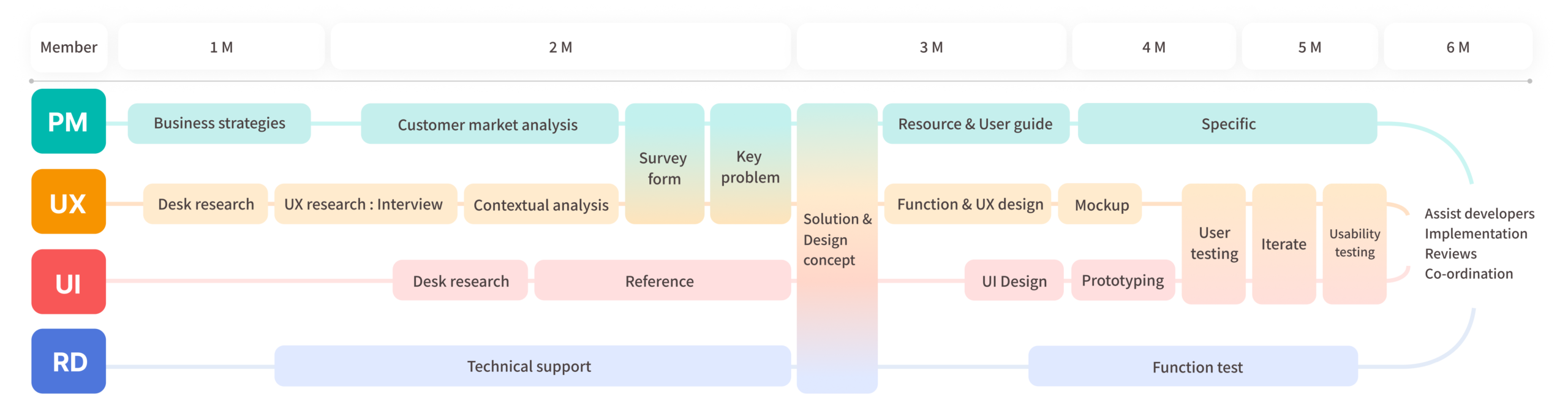
Project timeline
1. Kick-off meeting: define requirements
The kick-off meeting brought together the core development team to align on the project goals and scope. The PM introduced Barcode Manager 1.0, its application scenarios, target users, and stakeholder requirements, establishing a shared vision for a major redesign in Version 2.0.
✺ Product Study
Following the meeting, we began investigating existing product features and user needs, while the R&D team explored the technical requirements and constraints.
(The product features a built-in barcode module for scanner-based barcode reading.
Barcode Manager provides a centralized interface for configuring and managing scanning behavior, including read parameters and output settings.)
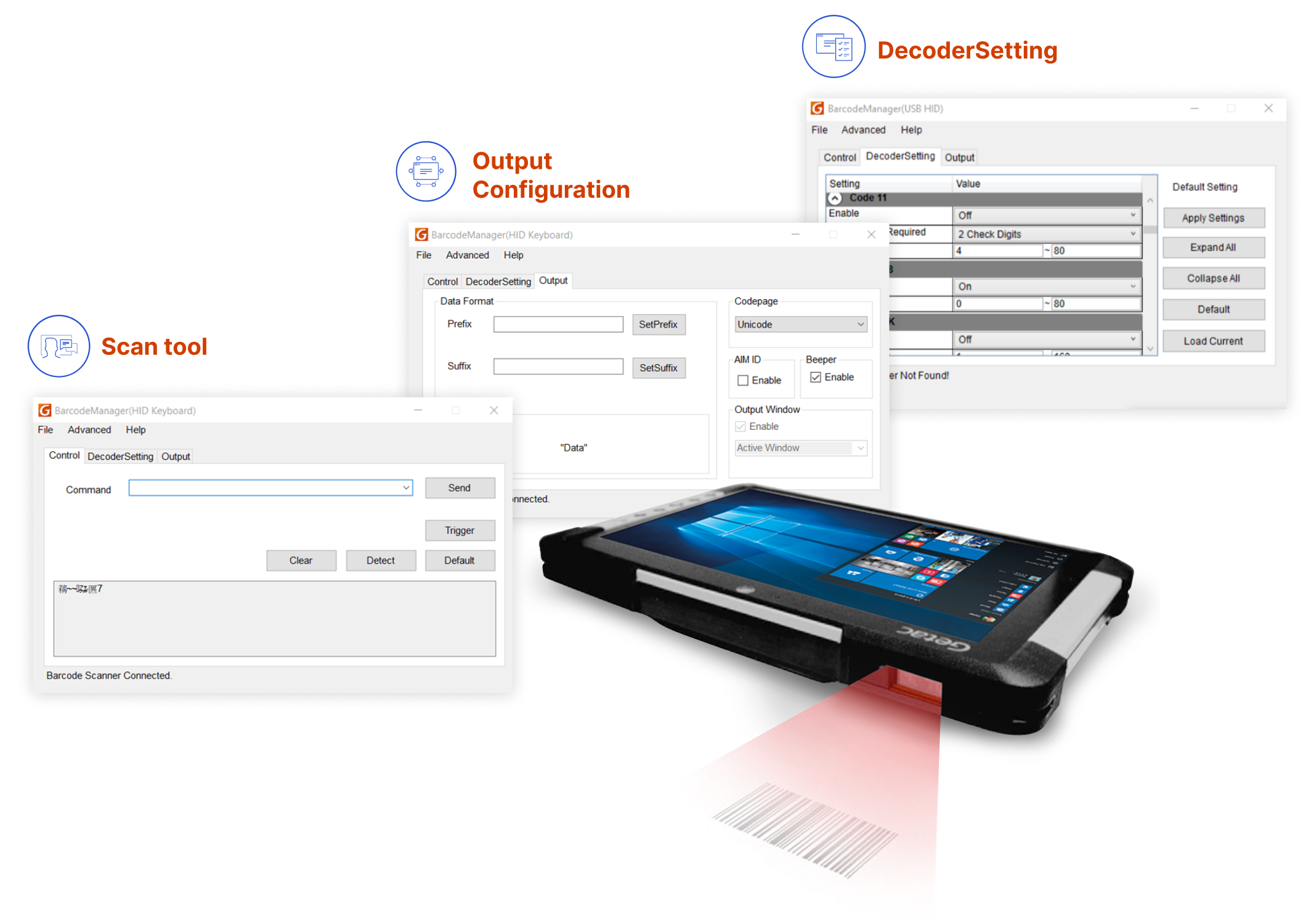
Target users include IT Engineers and frontline scanning operators :

Output Configuration Managers (IT Engineers)
IT professionals responsible for configuring barcode output formats to meet diverse operational requirements, including prefixes, suffixes, and advanced data formatting rules.
Focus: Ensuring flexible configuration and seamless integration with existing workflows.
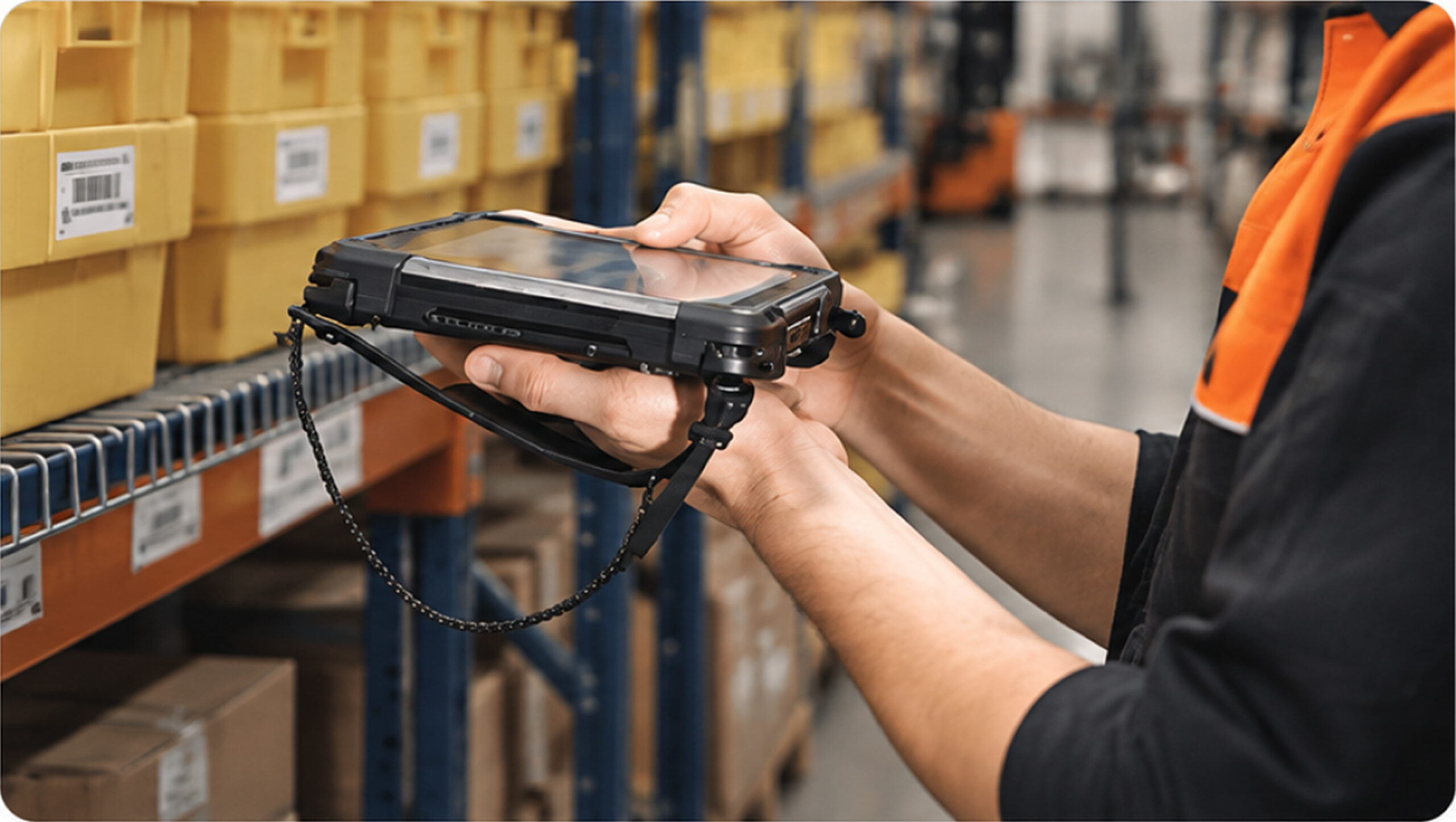
Scanning Operators (Warehouse Staff)
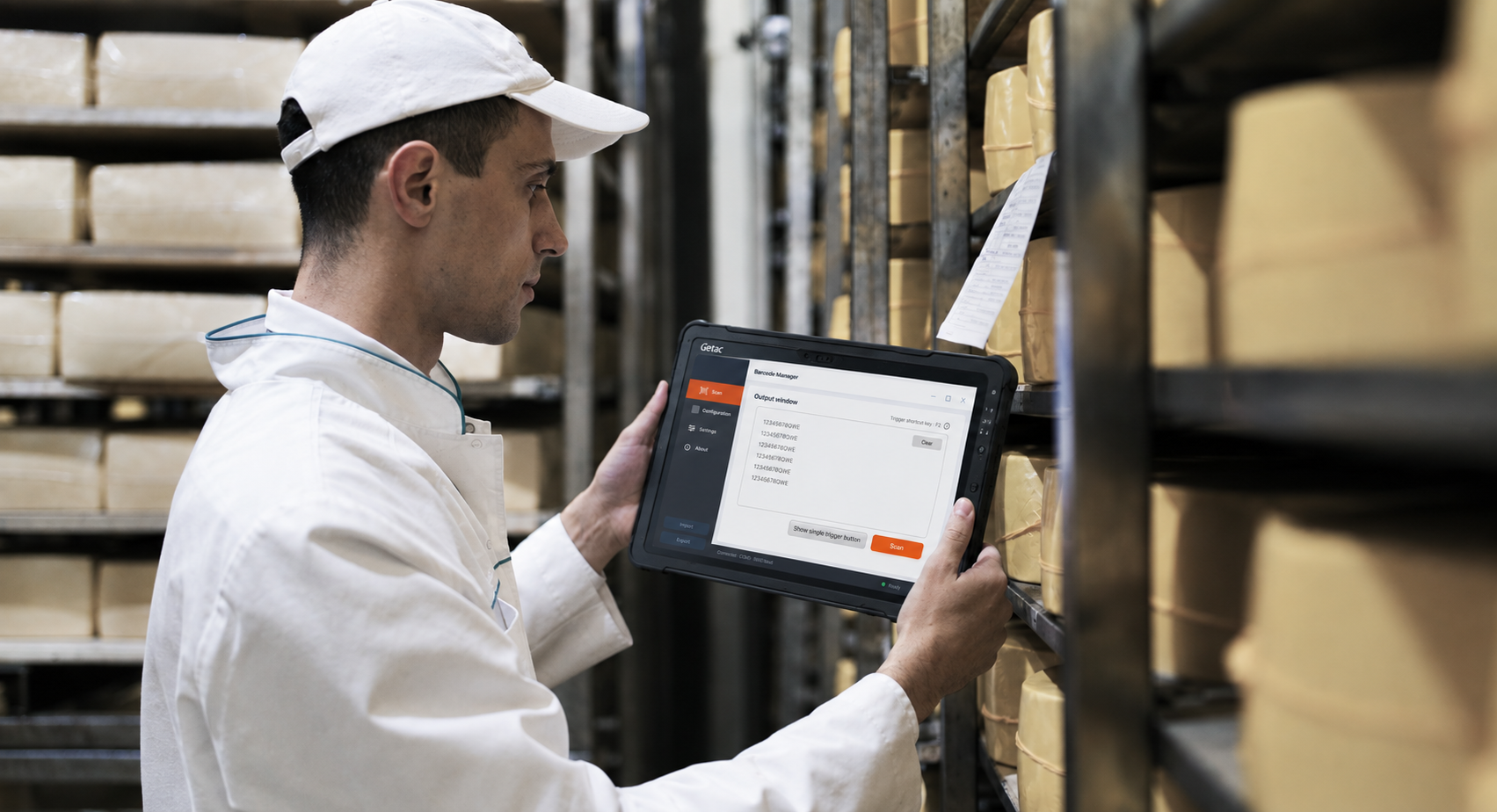
Employees who use rugged handheld devices to scan product barcodes during import and export operations.
Focus: Improving scanning convenience and operational efficiency through hardware-integrated scanning.
2. Research& observation: gather information
✺ Field observation & contextual inquiry
Field observations revealed gaps in the existing system across device usage, configuration capabilities, and user needs:
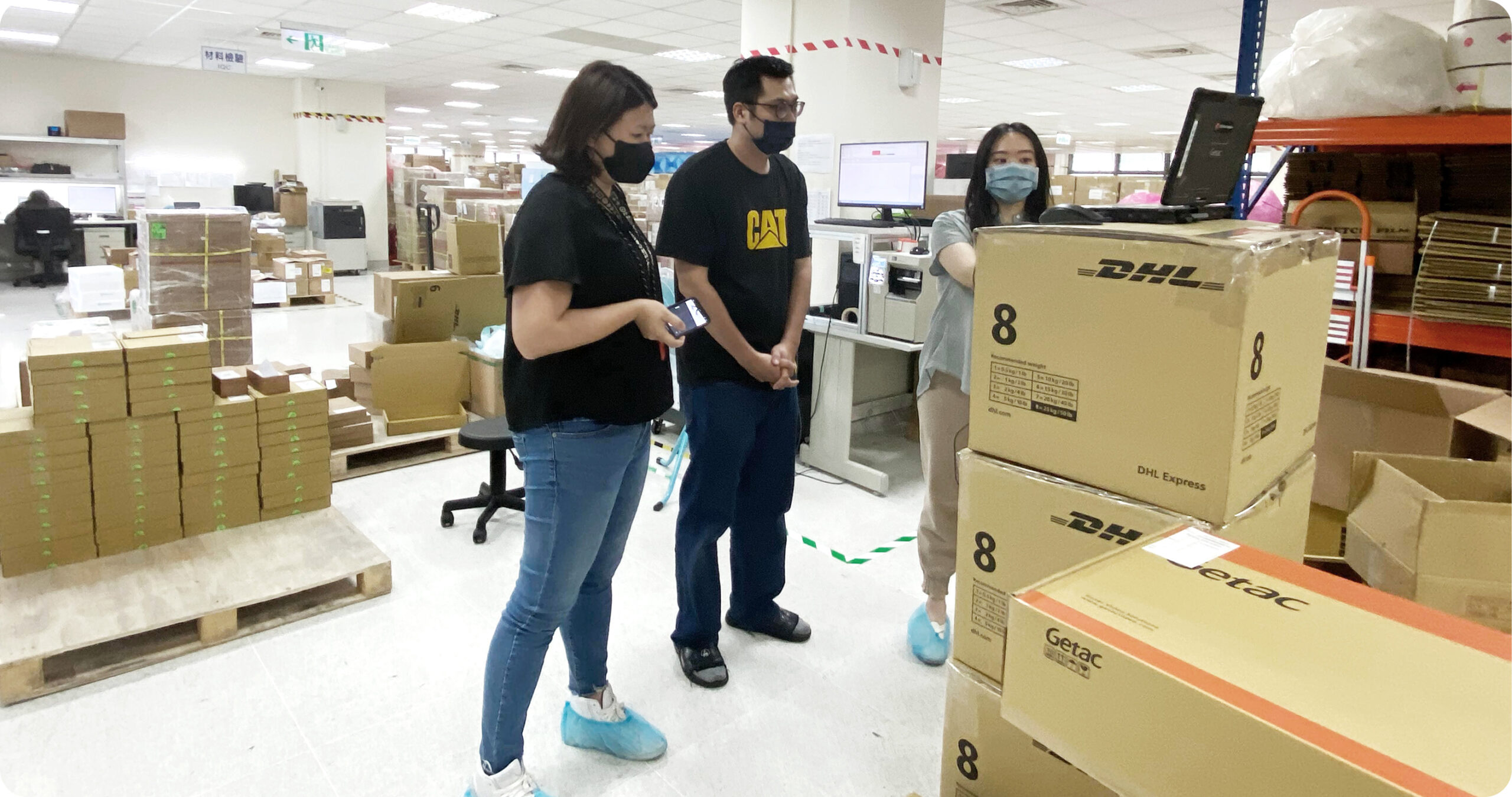
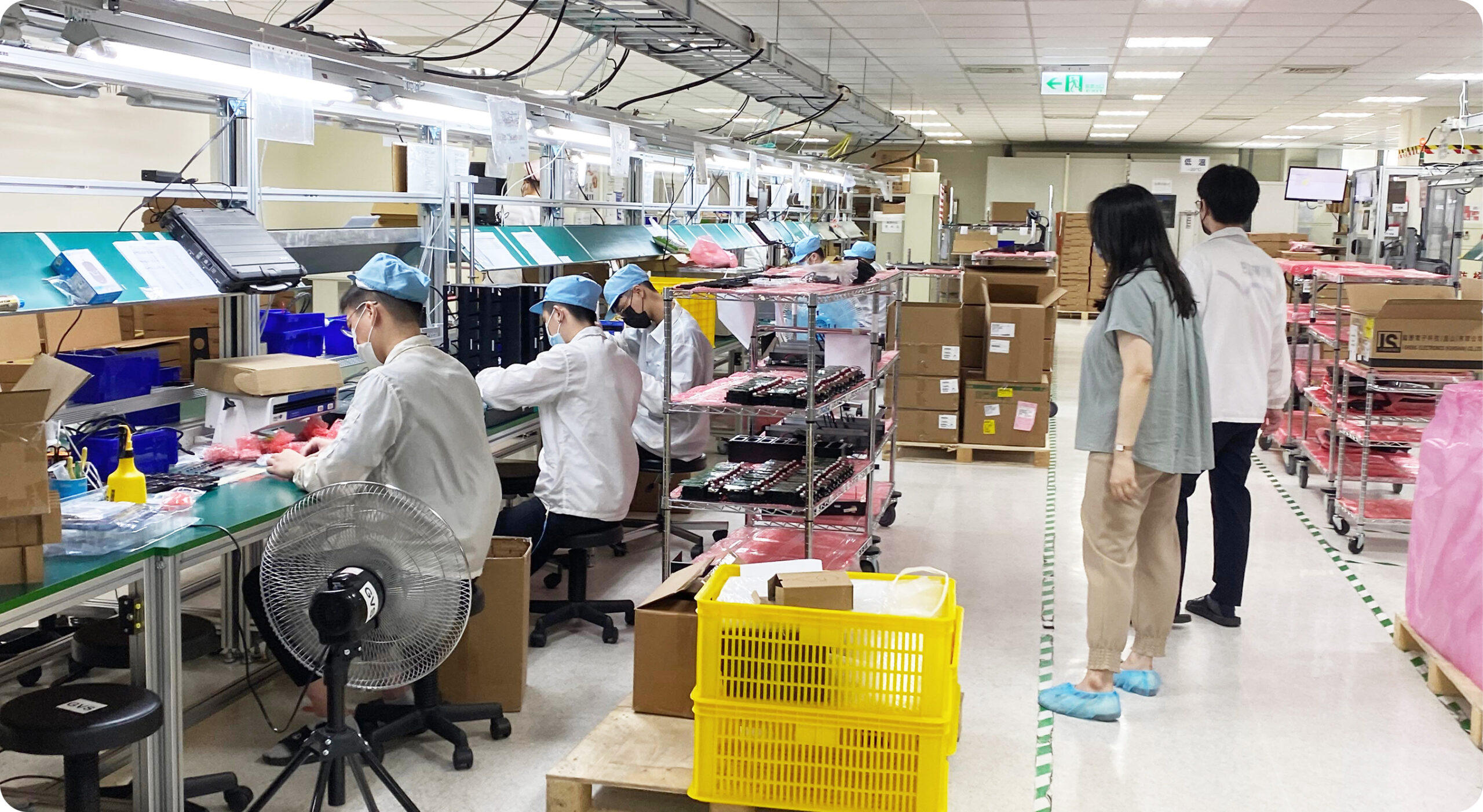
- Tablet-Based Operation: Rugged tablets are the primary devices used for barcode scanning and on-site operations.
- Limited Configuration Capabilities: The existing system lacks the flexibility to support complex barcode output settings and advanced configuration needs.
- Gaps in Feature Coverage: Existing features do not fully address the diverse requirements of warehouse workers and IT engineers across different operational scenarios.
✺ Multi-Source Research
Given that the product is primarily used by international customers, the research aimed to understand users’ usage frequency, behavioral patterns, and configuration needs. Through surveys, system feedback analysis, user interviews, and competitor benchmarking, we gathered insights into real-world usage and evaluated similar products’ features to identify user pain points and opportunities for improvement.

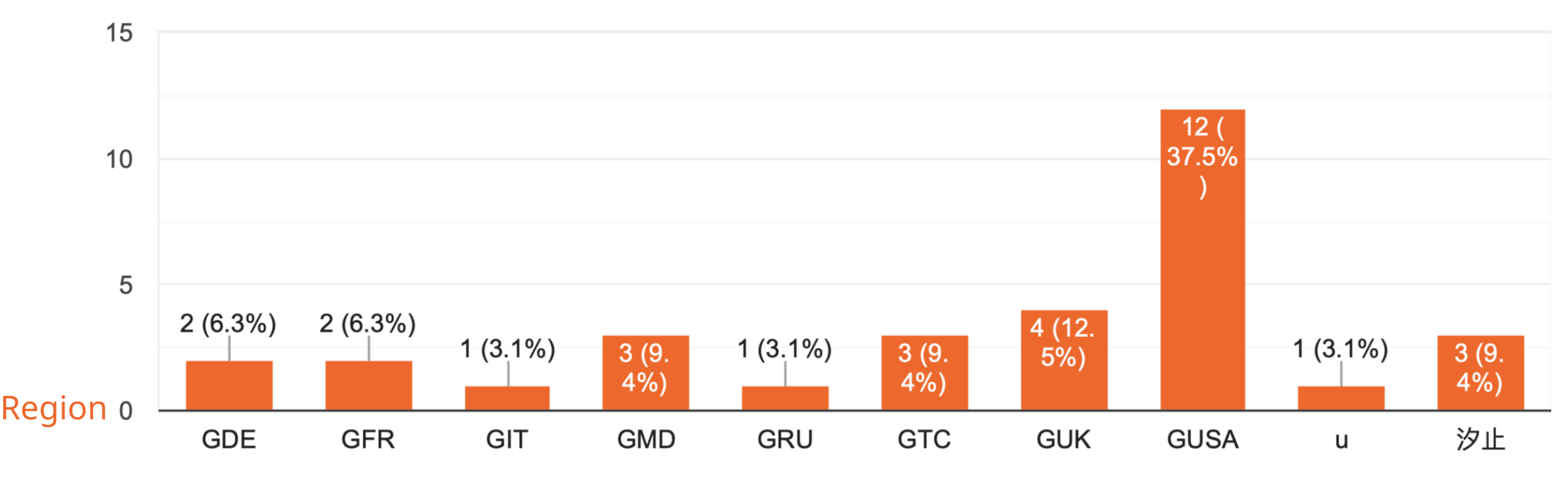
▎ Total Responses : 32
Source of Questionnaire : 75% IT Engineer, 25% Warehouse Staff
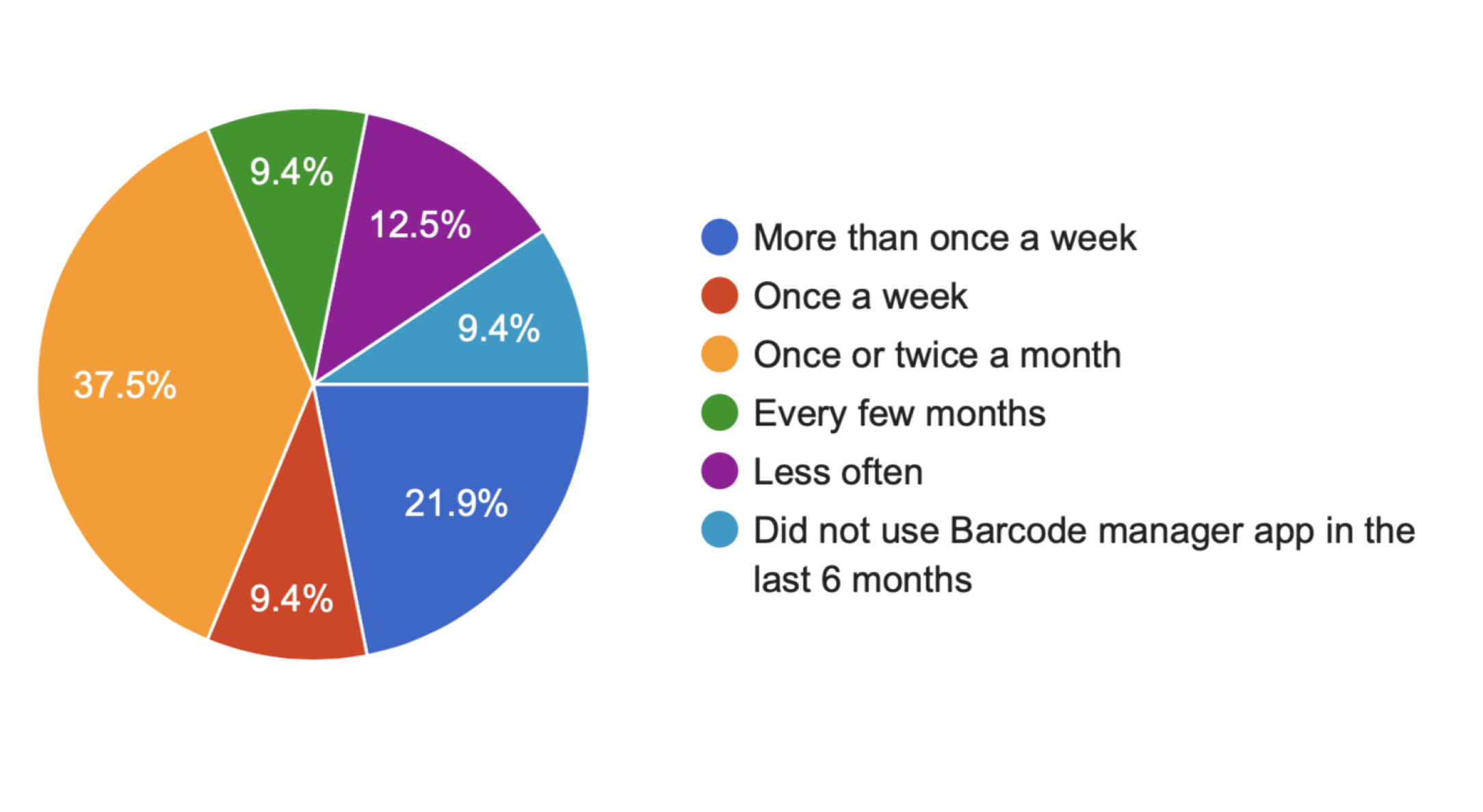
▎ Usage Frequency
1-2 times a month is the highest percentage
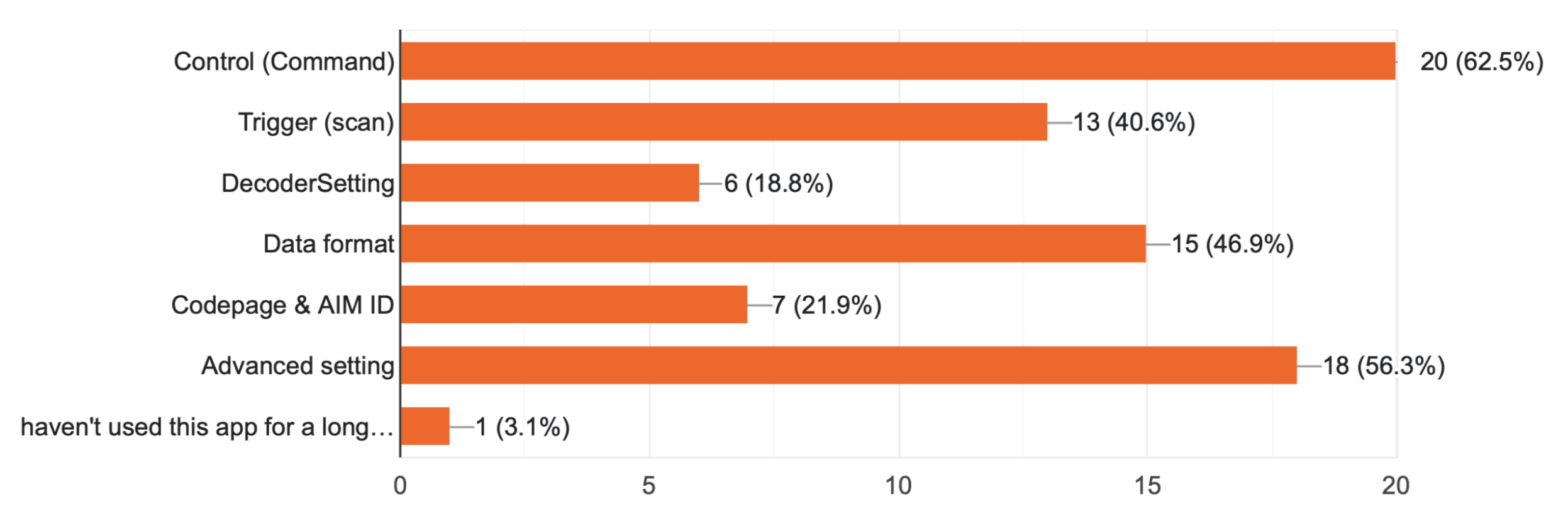
▎ Most-Used Features
Scan, Data format, Advanced setting
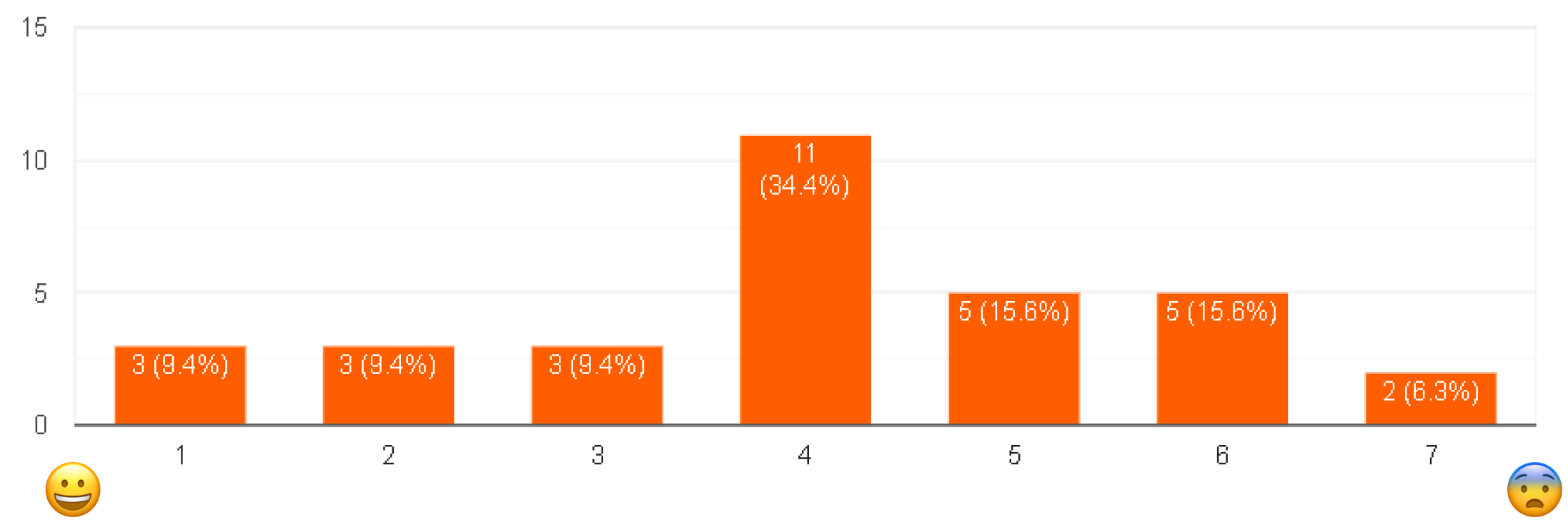
▎ Low Satisfaction with System Feedback and Feature Predictability
The system gave error messages that clearly told me how to fix problems.
This Barcode manager has all the functions and capabilities I expect it to have.
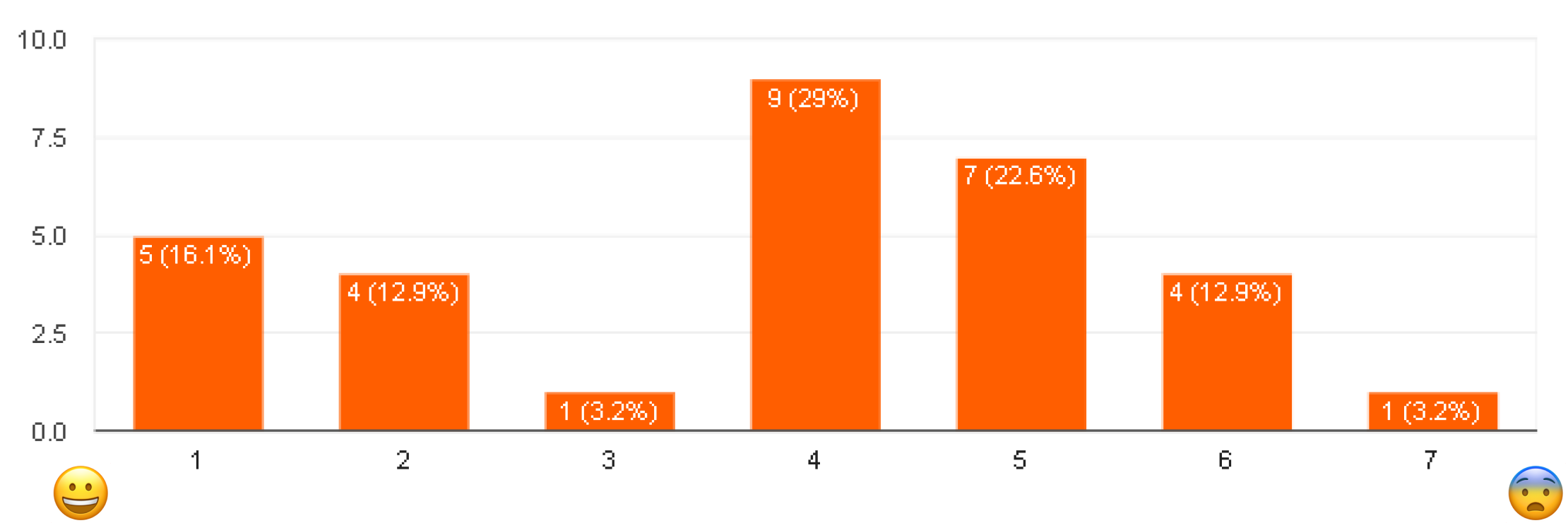
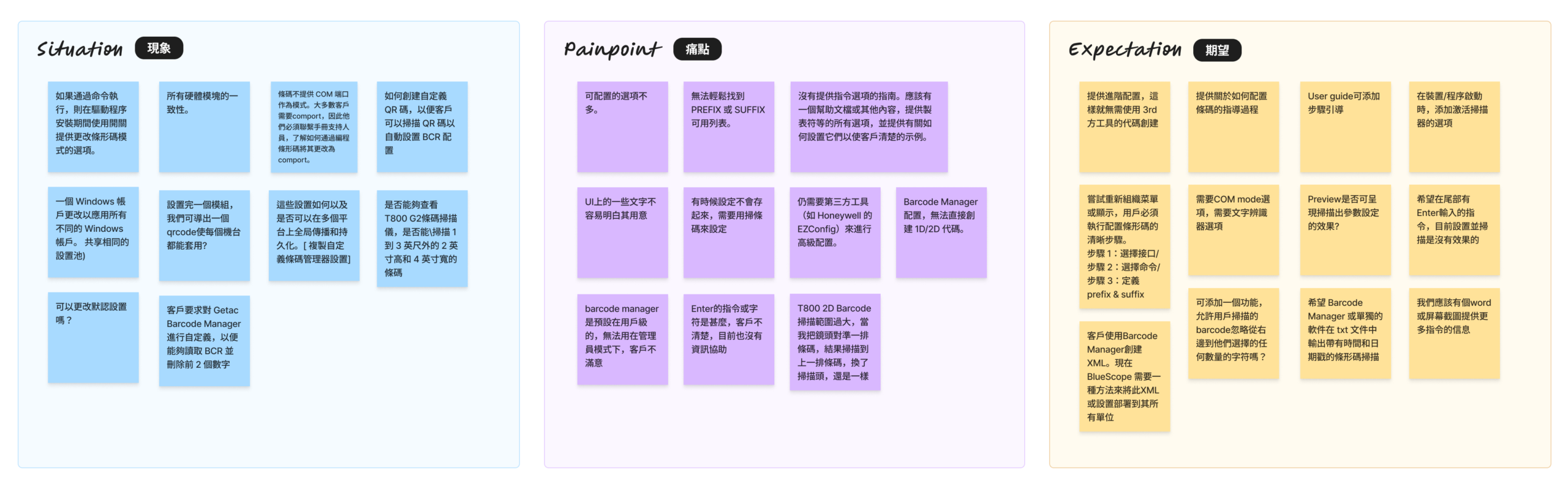
▎ These are the needs and questions mentioned by target audience in FTIE for Barcode Manager1.0
We synthesized user feedback across multiple Barcode features on the platform and initially categorized the findings into three areas: usage patterns, operational pain points, and user expectations. This served as an early-stage research synthesis, with most findings focused on software functionality.
- Middle-aged users tend to include group insurance in their personal insurance planning, suggesting that integrating personal policy information could improve policy management efficiency.
Preliminary Research
19
App product
- Desk Research
- Competitive Analysis
Qualitative Research
4+5
Enterprise|Target Users
- Stakeholder Interviews
- In-depth Interviews
Quantitative Research
134
Valid Responses
- Chi-Square Test of Independence
- Kano Analysis
✺ Product analysis : User Motivation Strategies
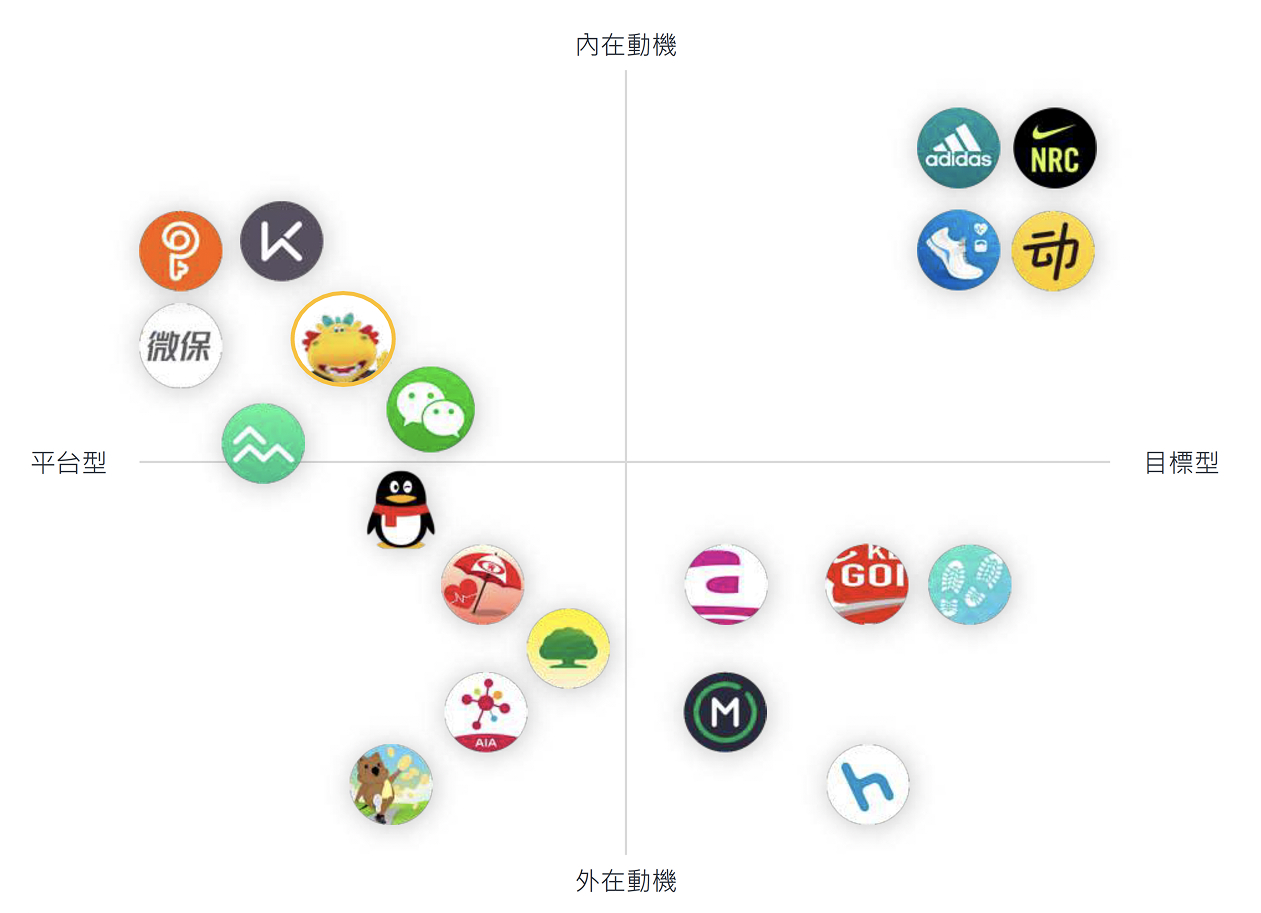
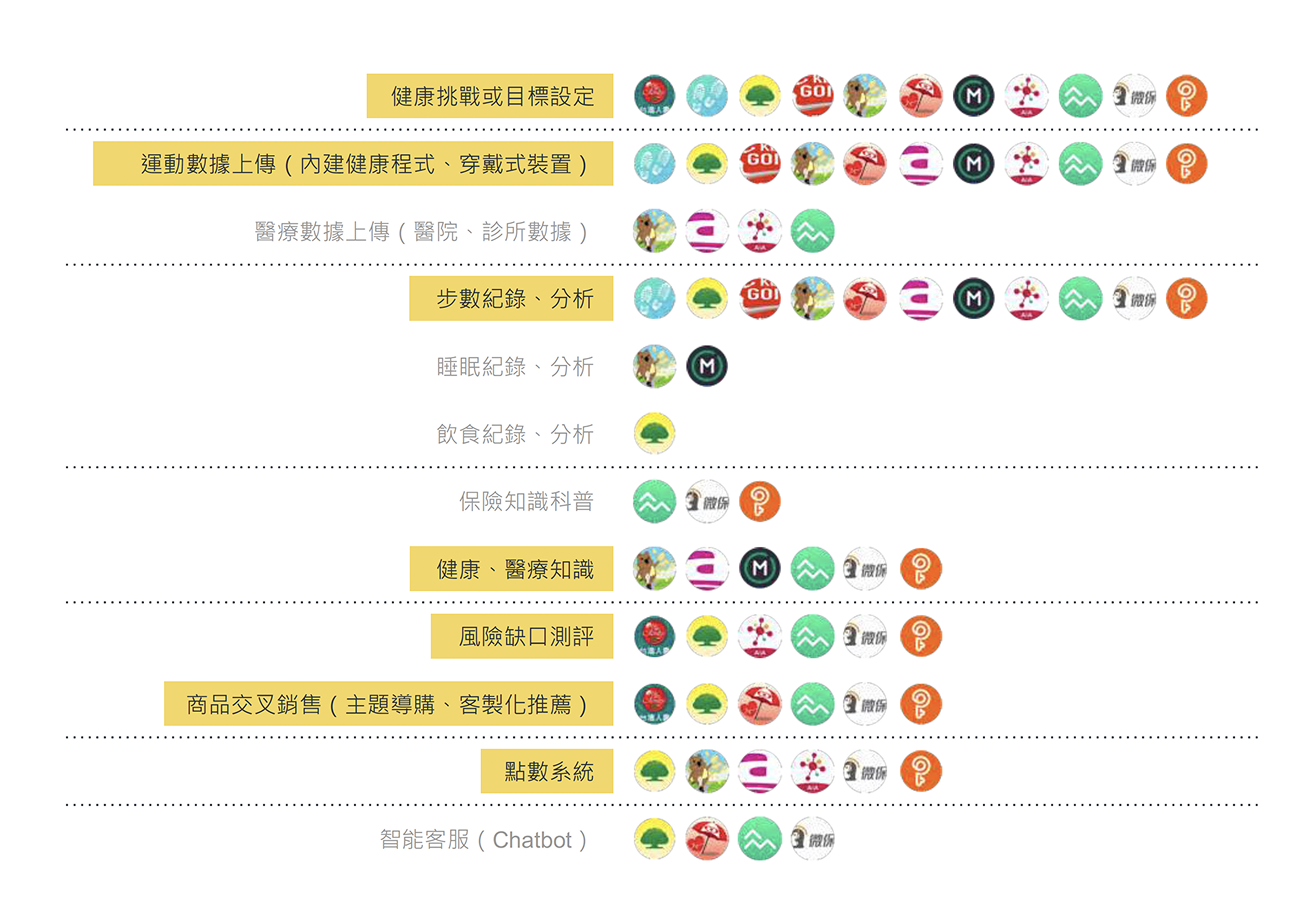
Product analysis revealed two key dimensions: Goal-Oriented × Platform-Oriented and Intrinsic × Extrinsic Motivation. Goal-oriented products focus on data and performance, while platform-oriented products support broader lifestyle ecosystems.
Further analysis of app features revealed that most insurance products now frame insurance through a health-focused lens rather than medical care alone.
Drawing on market trends and research findings, we found that combining personal health habits with social interaction can better foster long-term engagement. Therefore, we recommend positioning Teamwalk as a “Platform-Oriented × Intrinsically Motivated” health management product, differentiating it from traditional step-tracking apps.
Beyond comprehensive group insurance services, we recommend centering the product around community activities, peer encouragement, and a sense of achievement, transforming health management into a more engaging social experience and providing a clear foundation for product concept development.
✺ Quantitative Research : User Behavior Insights
Group Insurance Awareness
Health Management Experience
▎ Understand group insurance & claims
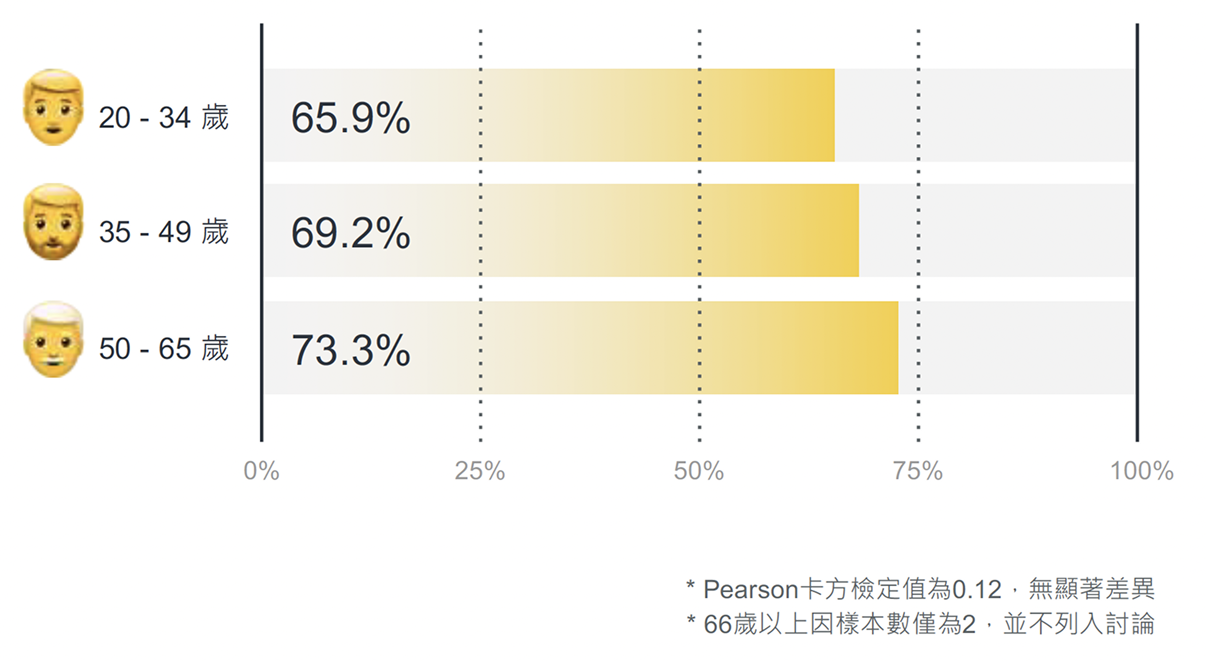
▎ Consider group coverage when planning insurance
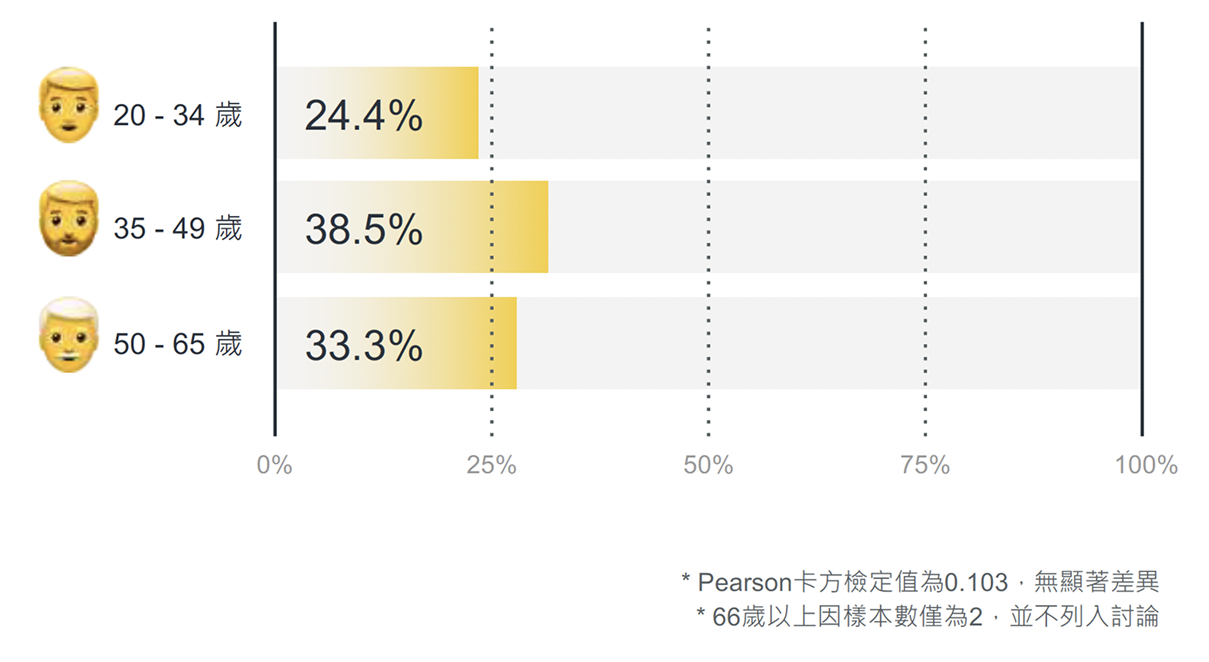
▎ Continued Use of Step-Tracking Apps
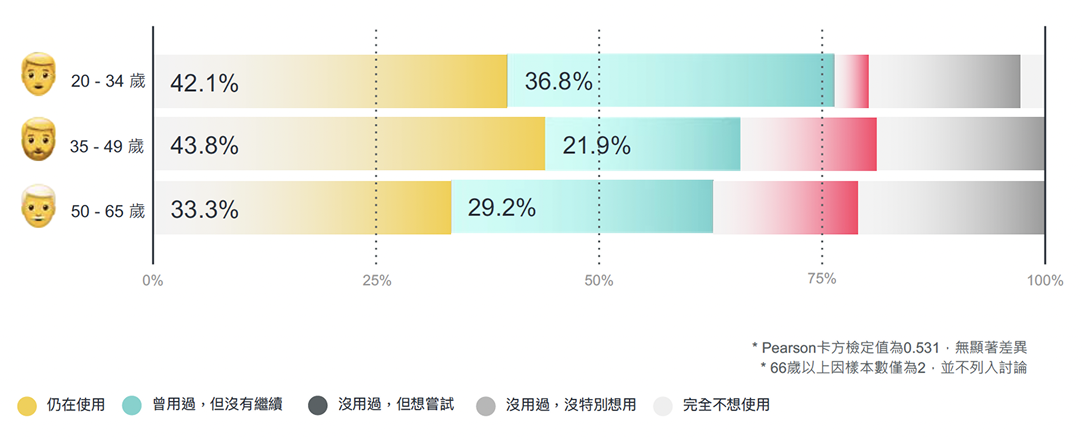
- Middle-aged users tend to include group insurance in their personal insurance planning, suggesting that integrating personal policy information could improve policy management efficiency.
- Step-tracking app usage is common, especially among younger users, with nearly half continuing to use them.
Willingness to Purchase Walking-Based Insurance
▎ Average Daily Steps
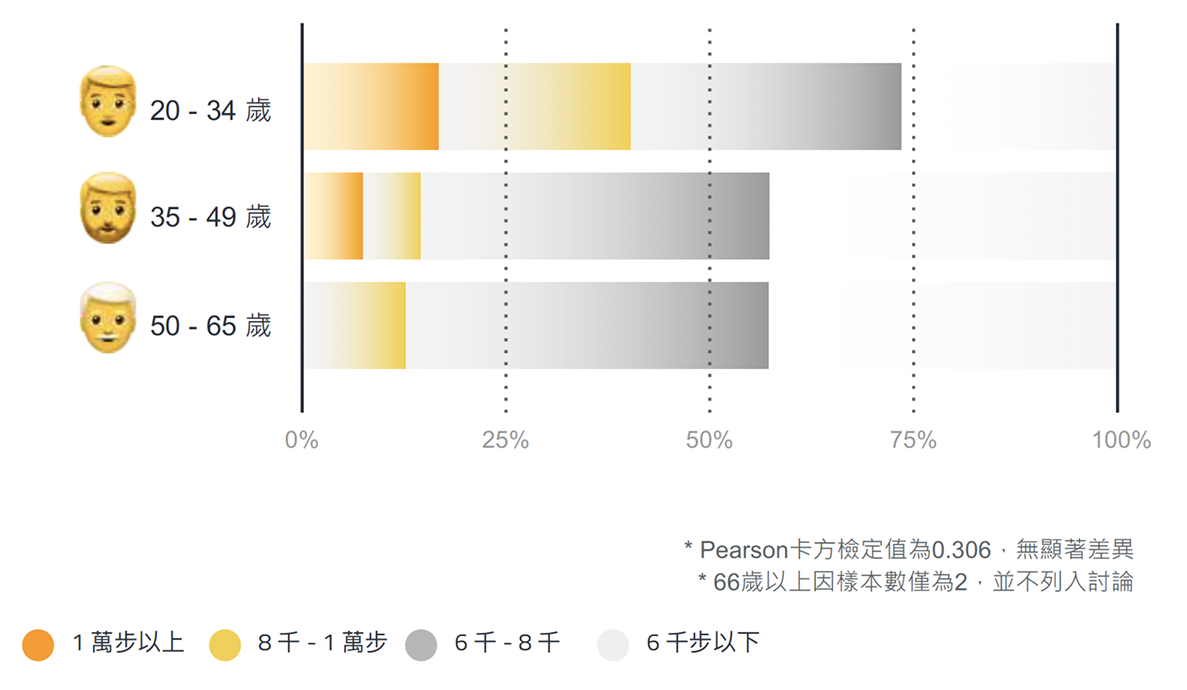
▎ Walking Insurance Purchase Intent by Age
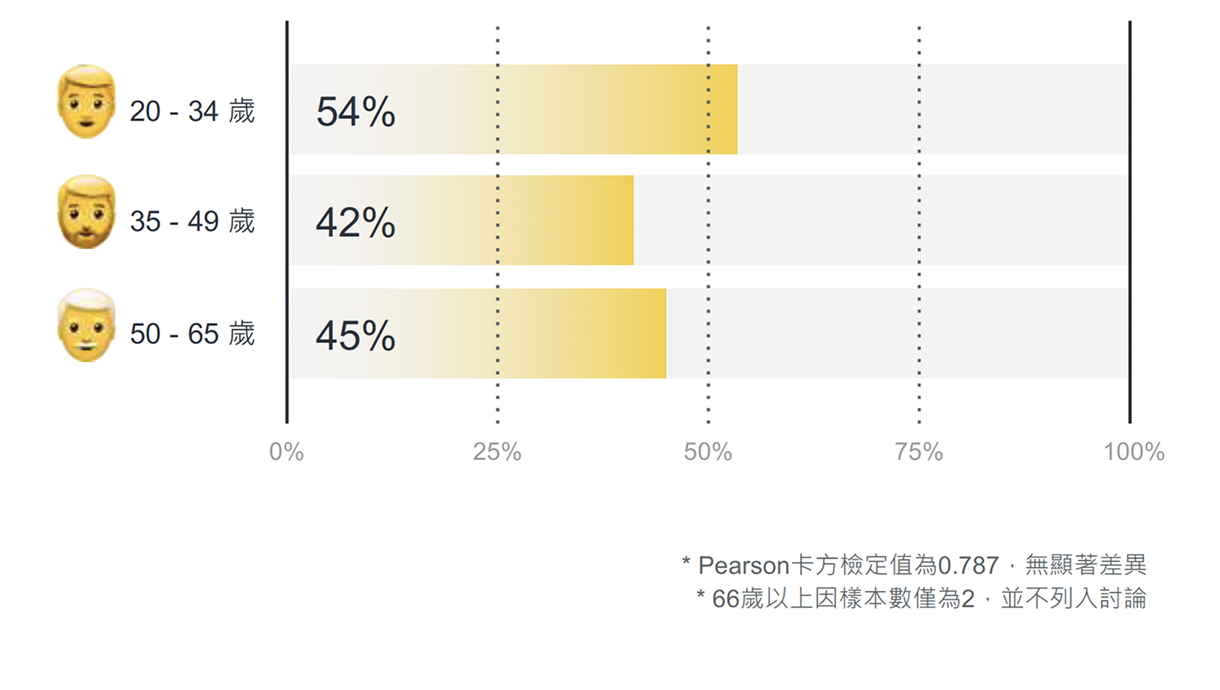
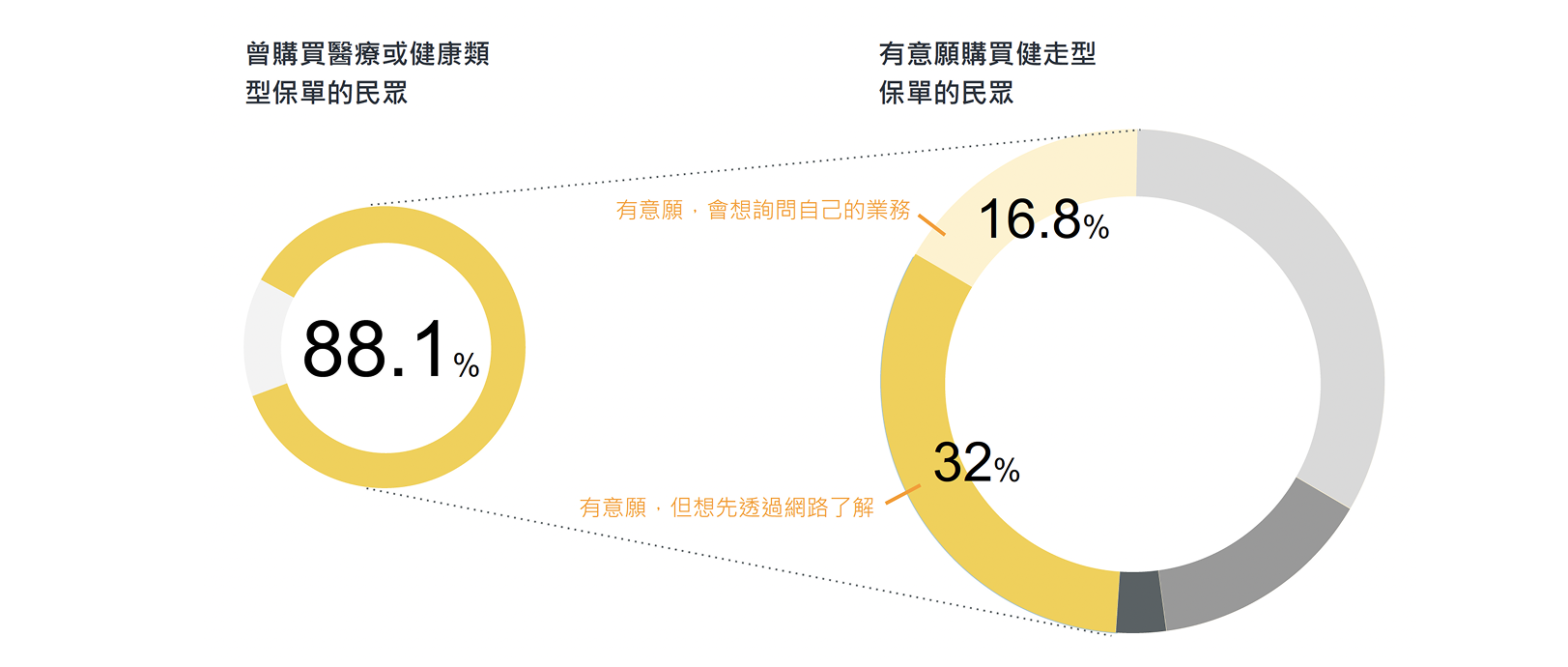
- Younger users show the highest walking activity and stronger willingness to purchase walking-based insurance.
- Nearly half of those who have purchased medical or health insurance are interested in walking-based insurance.
Preferred User Motivators
▎ Preferred Motivators
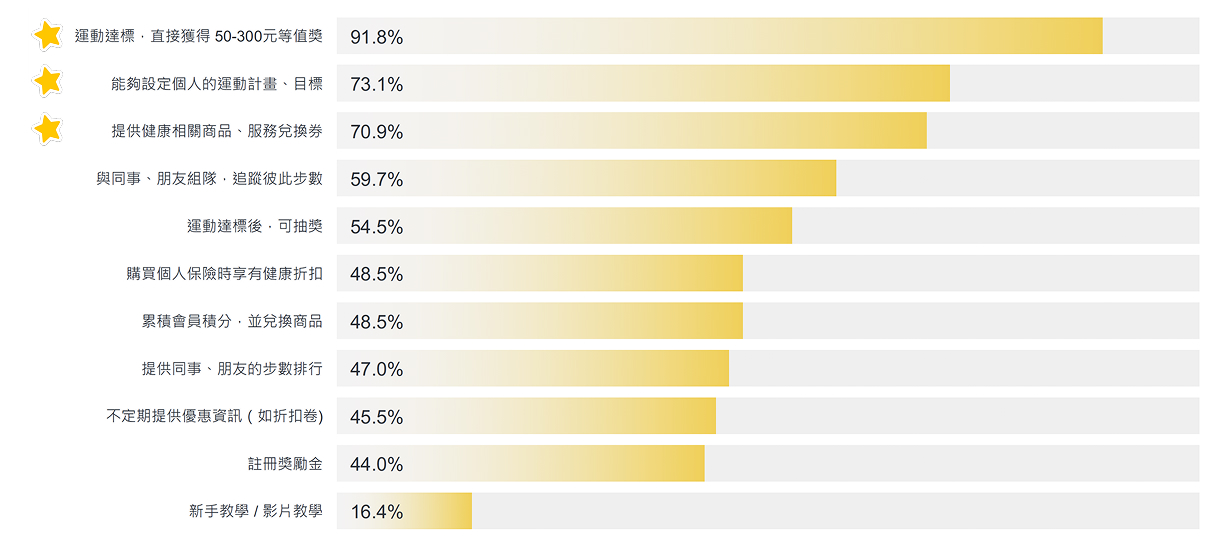
▎ Monetary Incentive Comparison
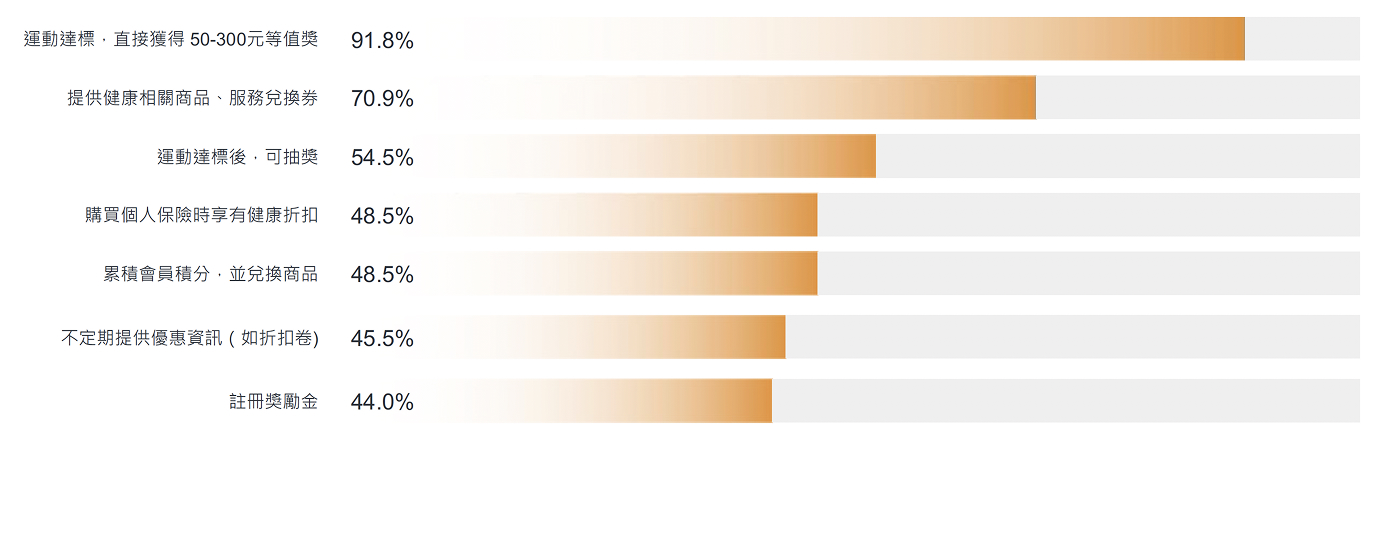
- To effectively motivate users, make goal setting easy and provide feedback and rewards upon completion to help build lasting habits.
- For monetary rewards, users prefer tangible rewards or vouchers over insurance discounts and uncertain benefits.
✺ Qualitative Research : Target Audience Definition & Interview
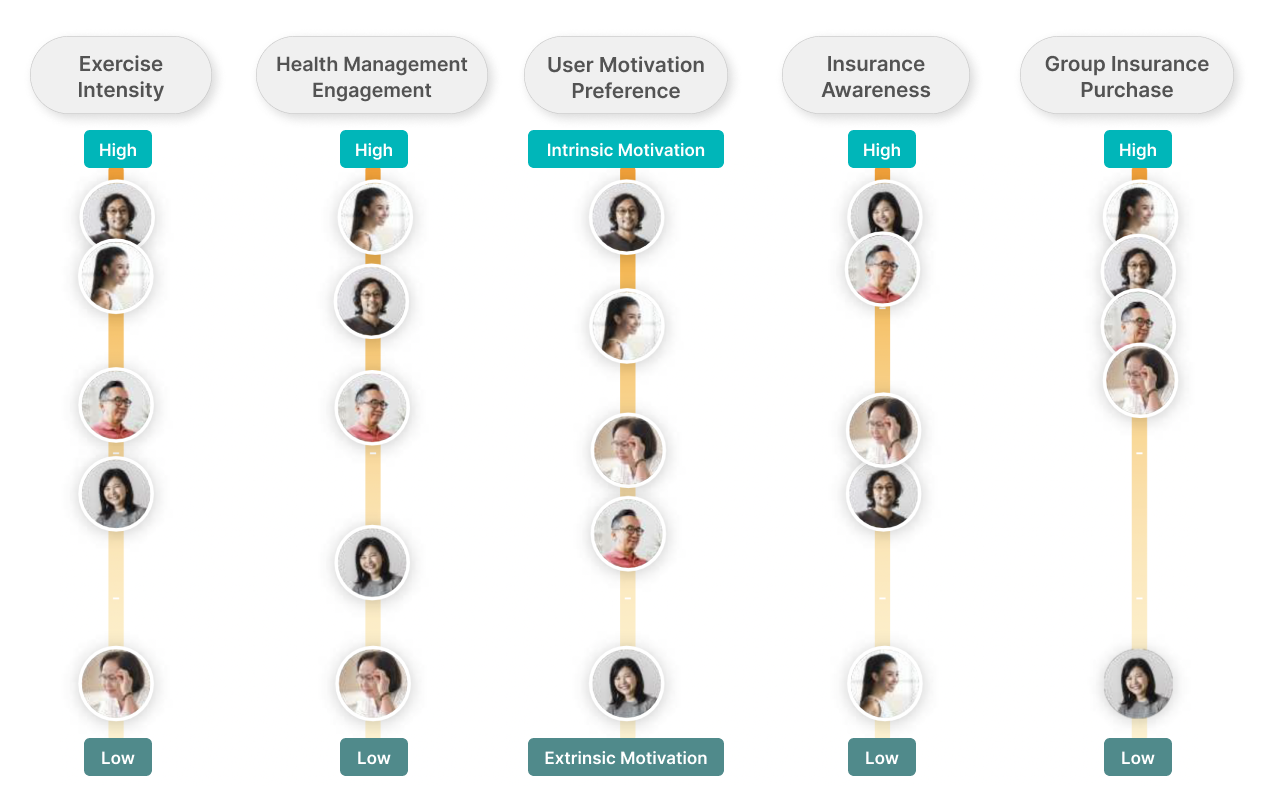
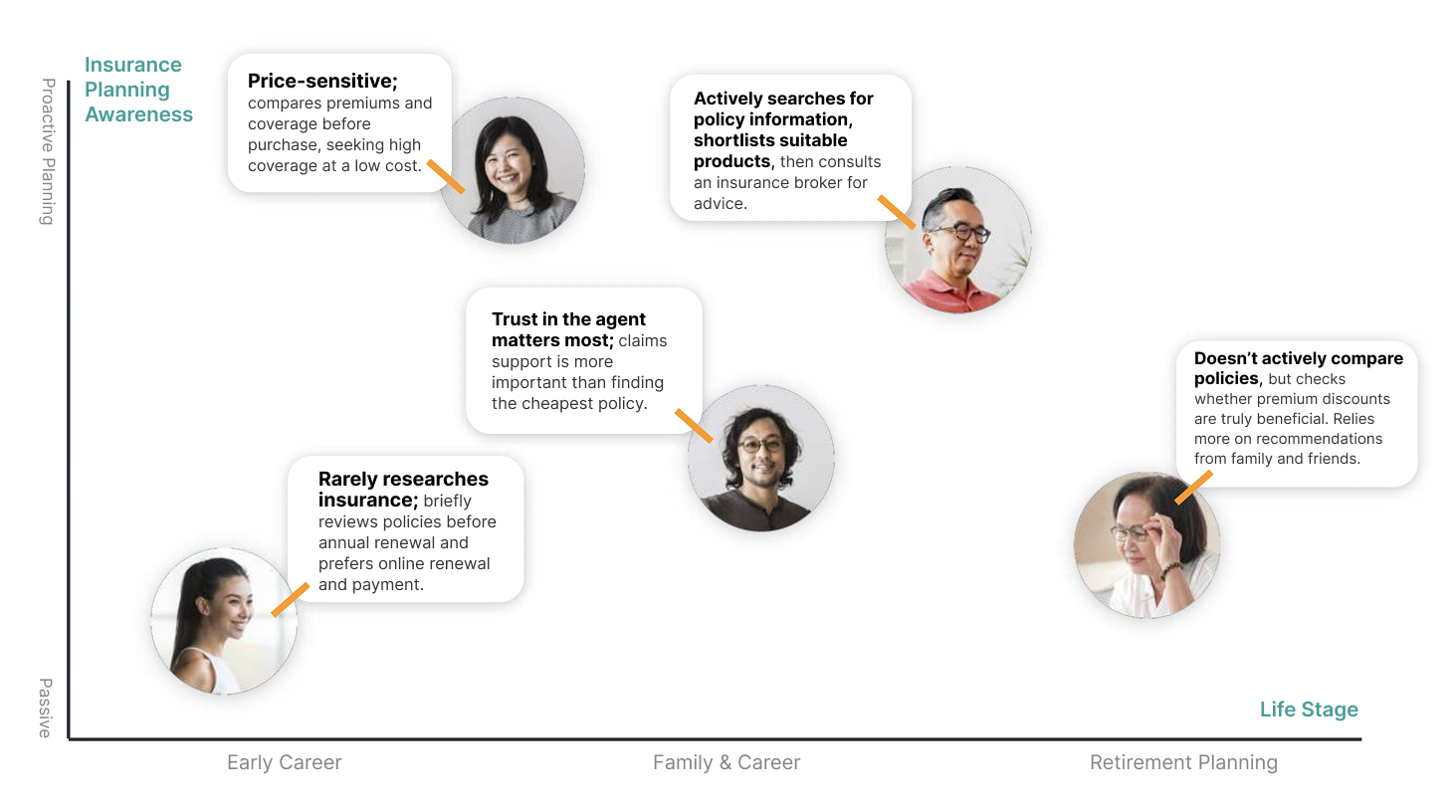
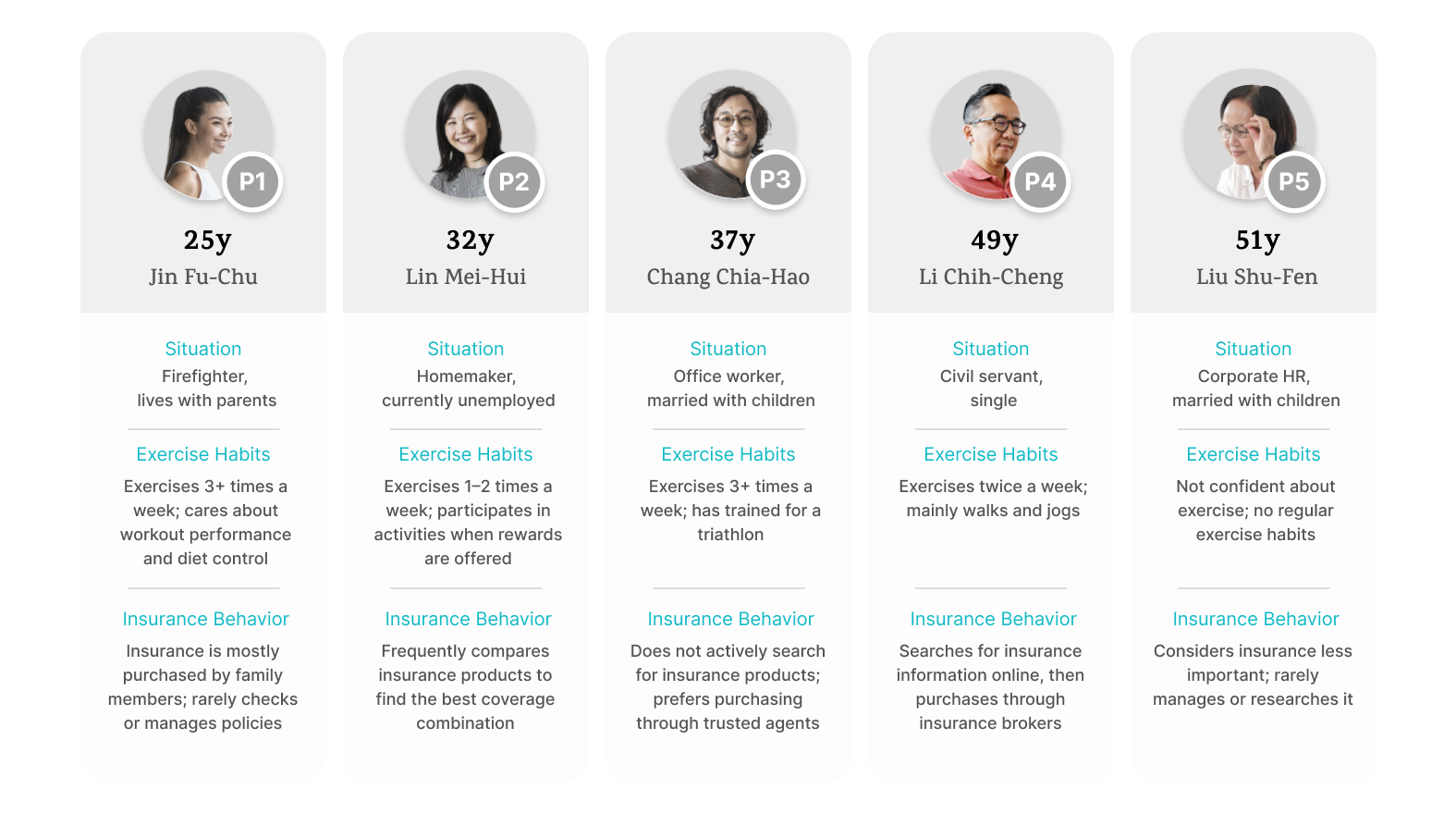
Based on the platform’s goals, we defined five key research dimensions and mapped the target audience spectrum to analyze different user characteristics. We then selected representative participants for in-depth interviews.
✺ Empathy Map
We conducted in-depth interviews with five key user groups to gain a comprehensive understanding of their current behaviors, experiences, and practices related to exercise and health management. We further explored their needs, expectations, and pain points, as well as their experiences with insurance claims, including existing processes, operational methods, interaction patterns, and key challenges.
Following the interviews, the team used Empathy Maps to organize and synthesize user feedback across four dimensions—Says, Thinks, Does, and Feels. By cross-analyzing the findings, we identified common behavioral patterns and underlying needs, ultimately distilling them into key insights that informed the subsequent product and service design.
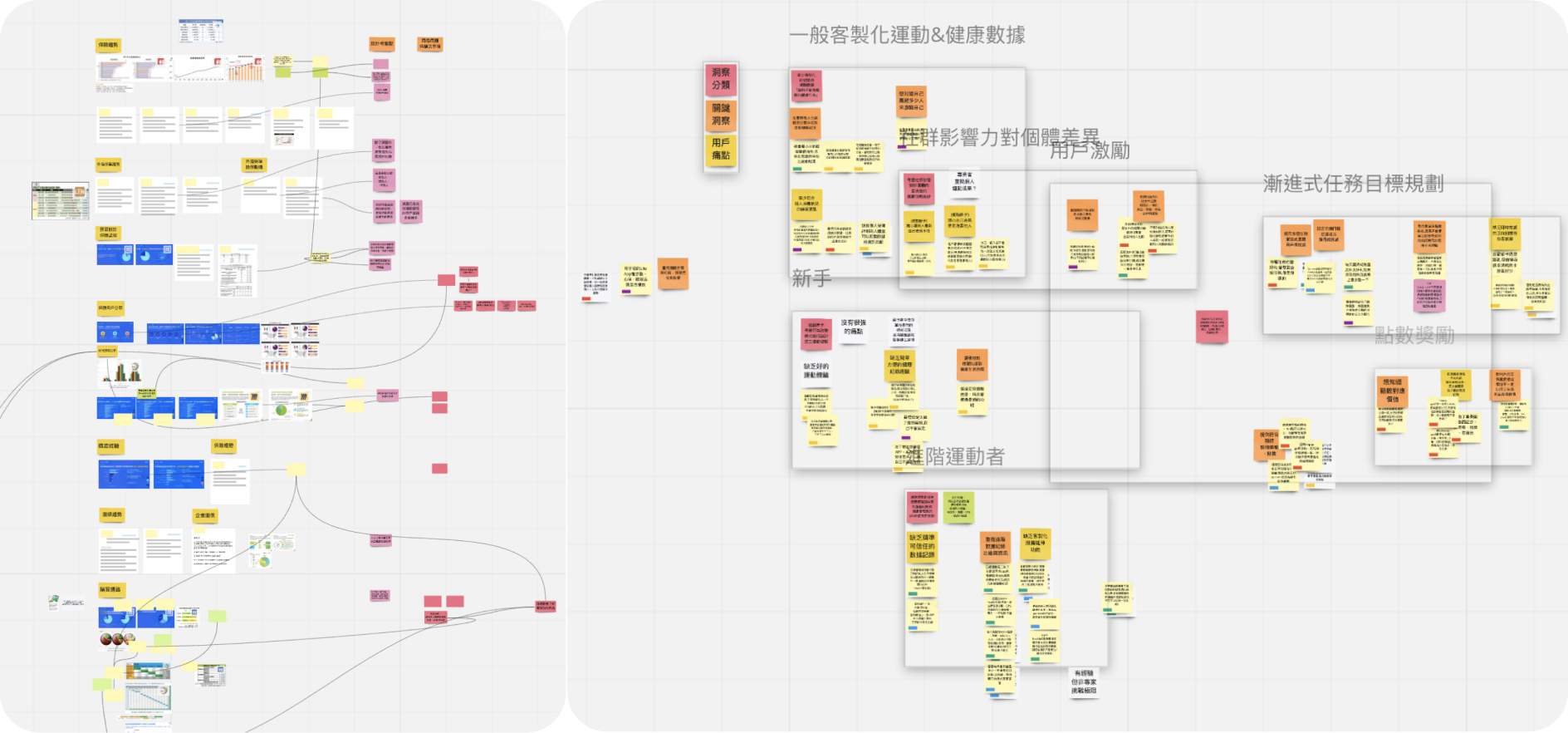
Key insight
Link personal and social data to personalize content, increase information value, and motivate data improvement.
Offer diverse activity formats based on health performance and social preferences to meet individual needs.
Tailor incentives to exercise experience and intensity, using real-time feedback to build achievement and encourage continued use.
Points alone cannot drive participation. Rewards should connect with users’ real-life needs to increase motivation.
Users still seek professional support for insurance purchase and management. Expertise and accessibility are key experience differentiators.
Enrollment, cancellation, and claims shape users’ final impression. Simplified processes and professional support can improve retention.
Privacy boundaries remain unclear, with employees and enterprises having conflicting expectations around data usage.
The group insurance platform should empower HR teams rather than create additional administrative workload.
3. Ideate : Create product features
✺ Mapping Insights to Design Concepts: Health Promotion × Group Insurance Services
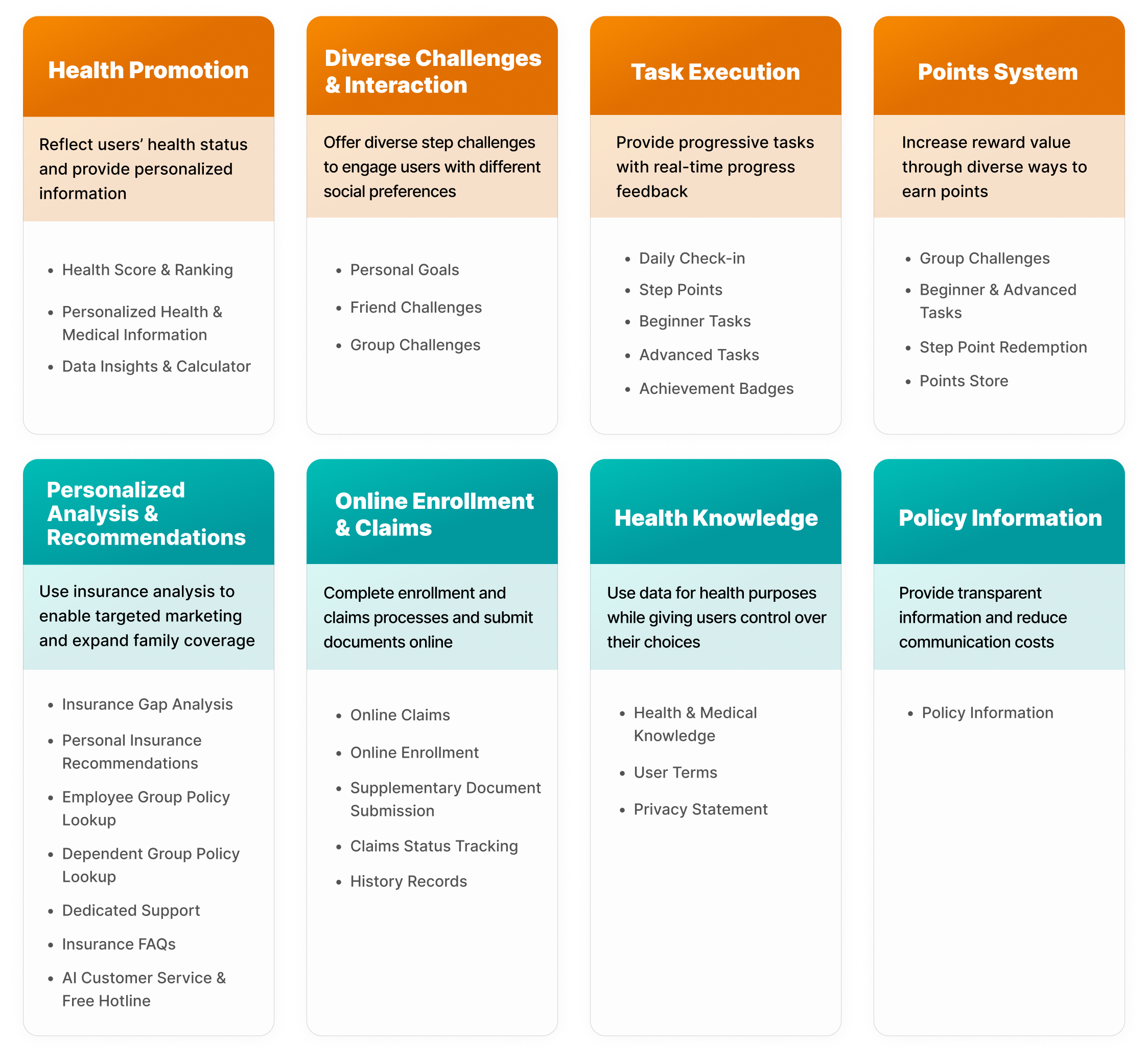
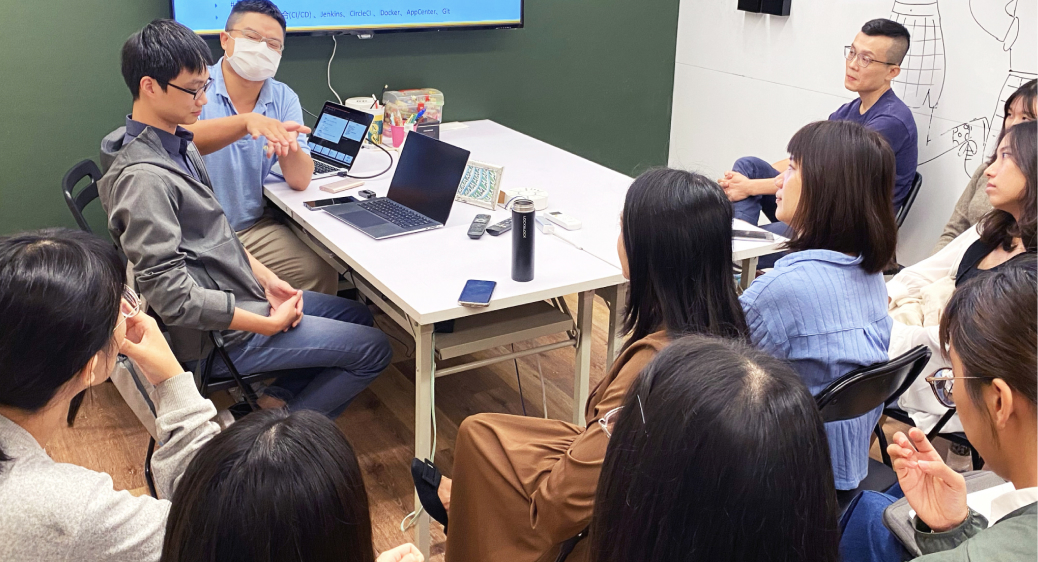
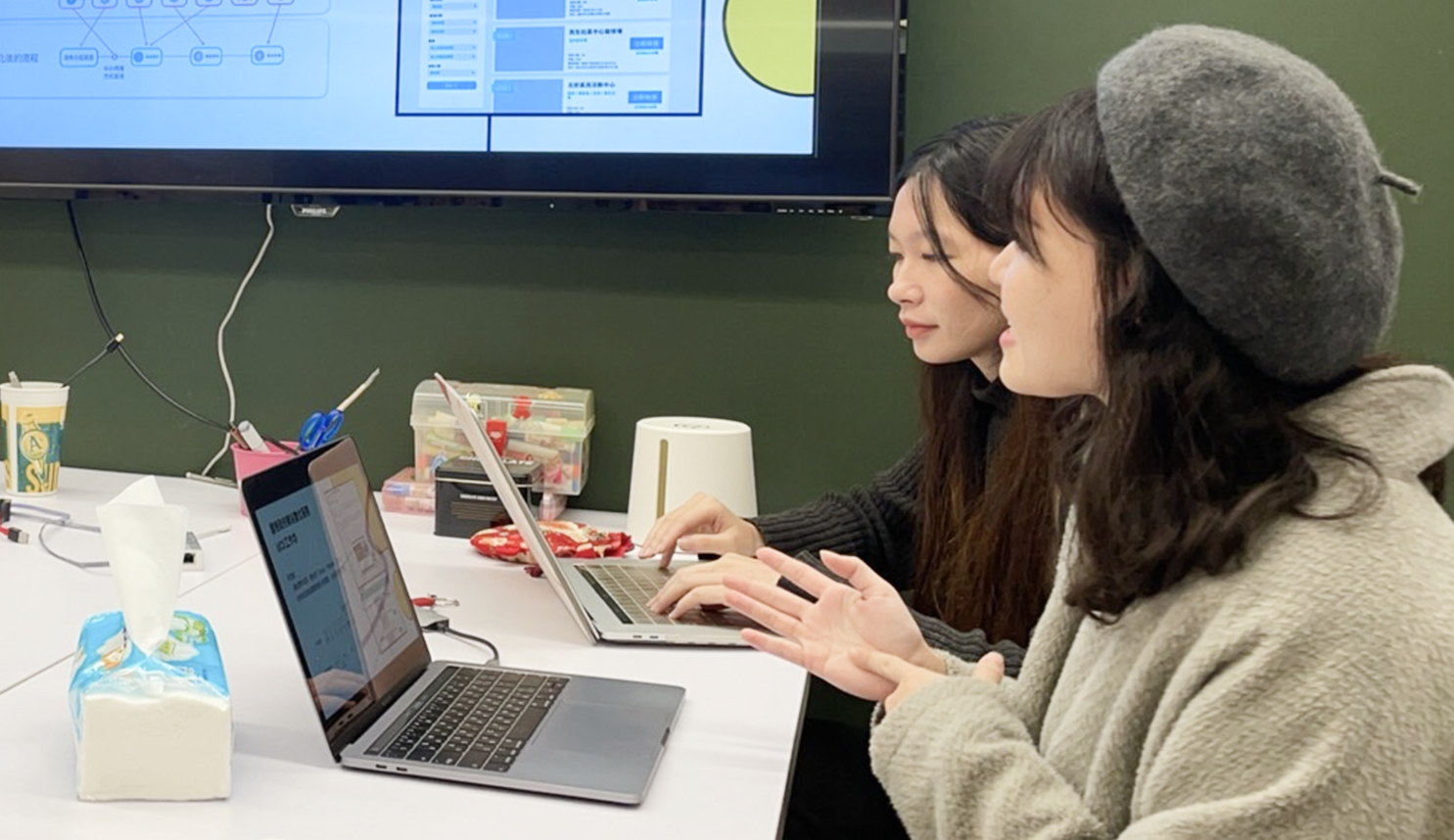
With the final design concept established, we used Miro to explore detailed features, define the information structure, and organize functional modules. Before moving into UX flows and prototyping, we aligned with the client on the overall design spec to validate requirements, technical constraints, and feasibility
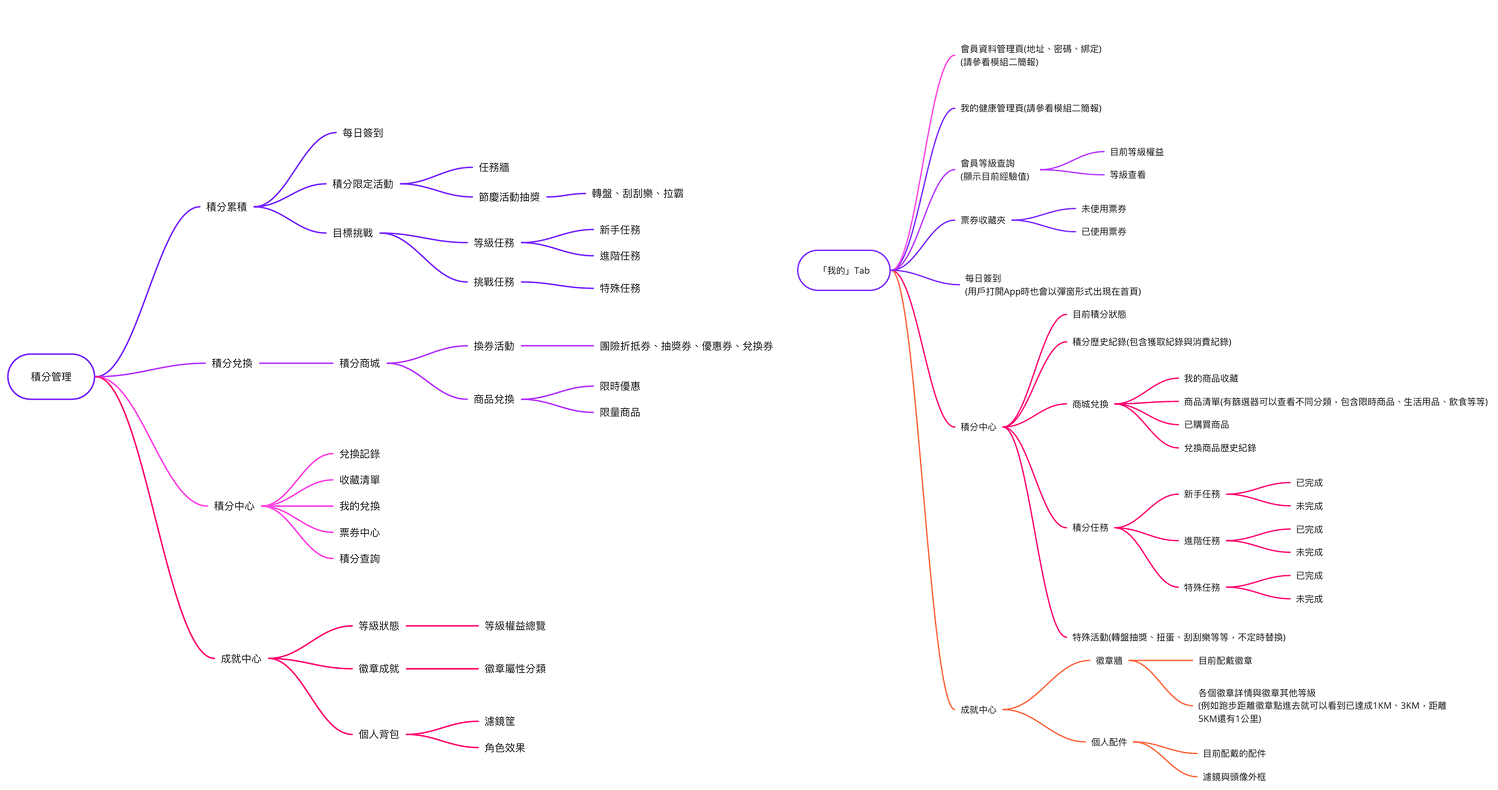
This priority feature map captured our key ideas and initial app information architecture.
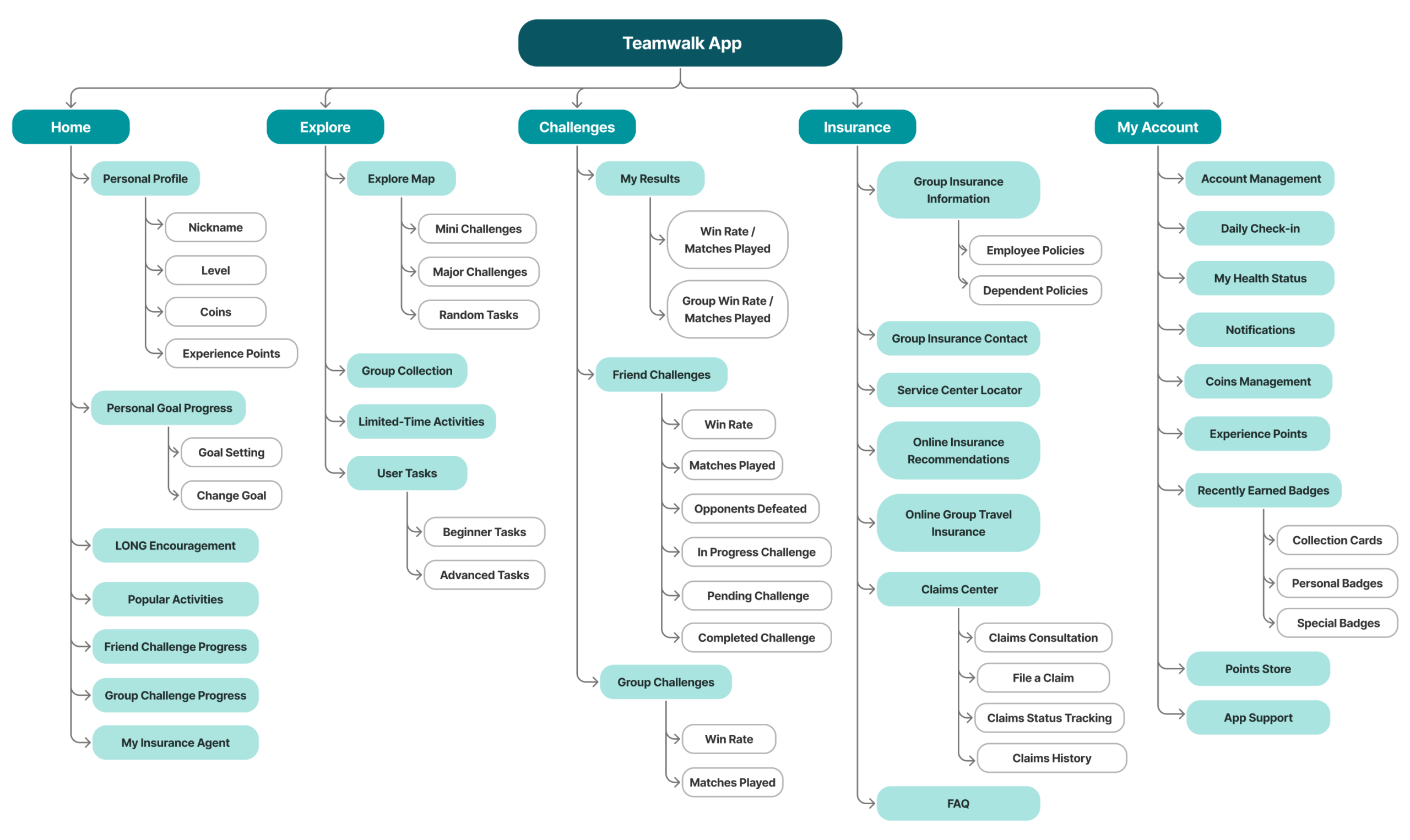
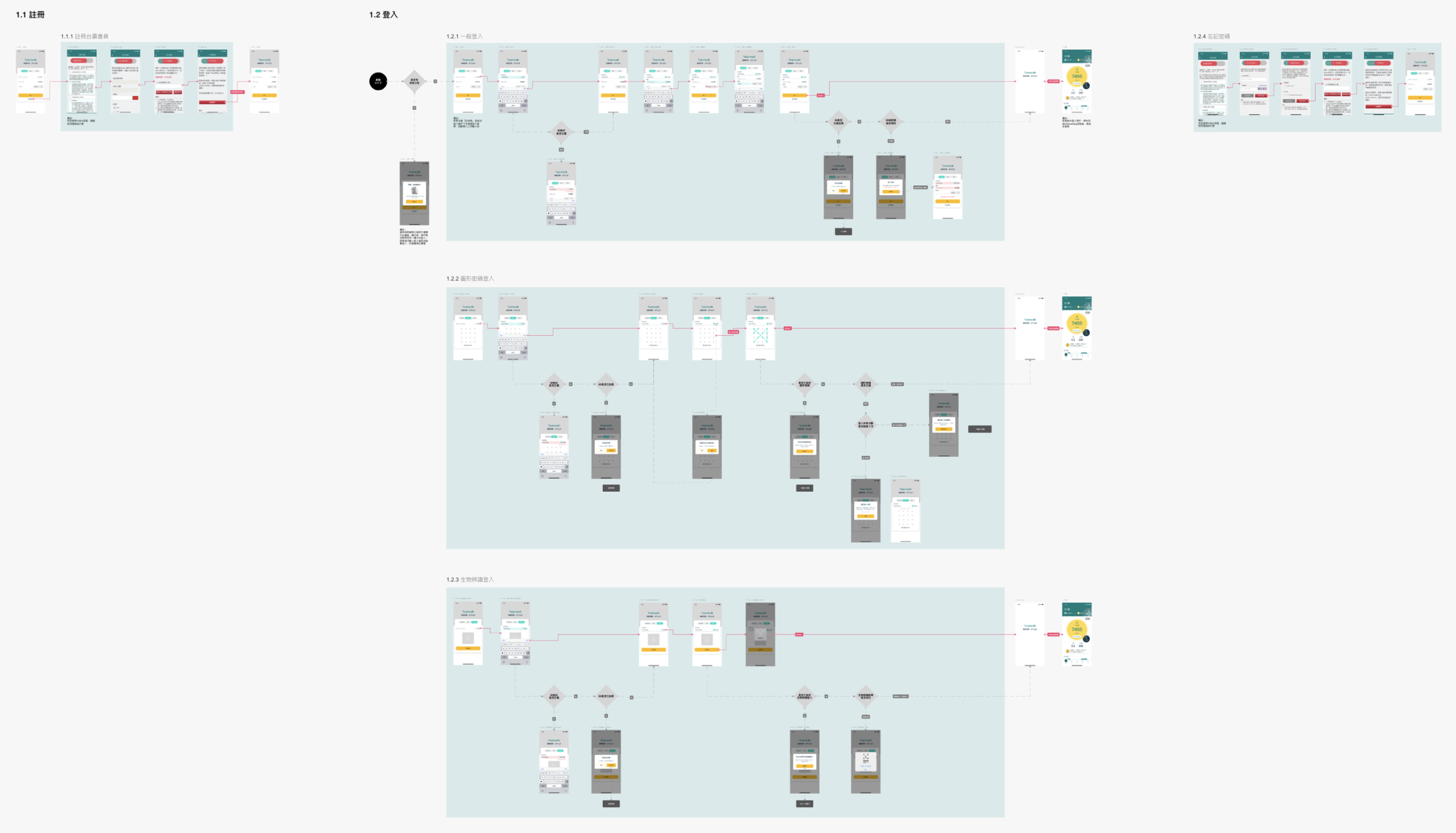
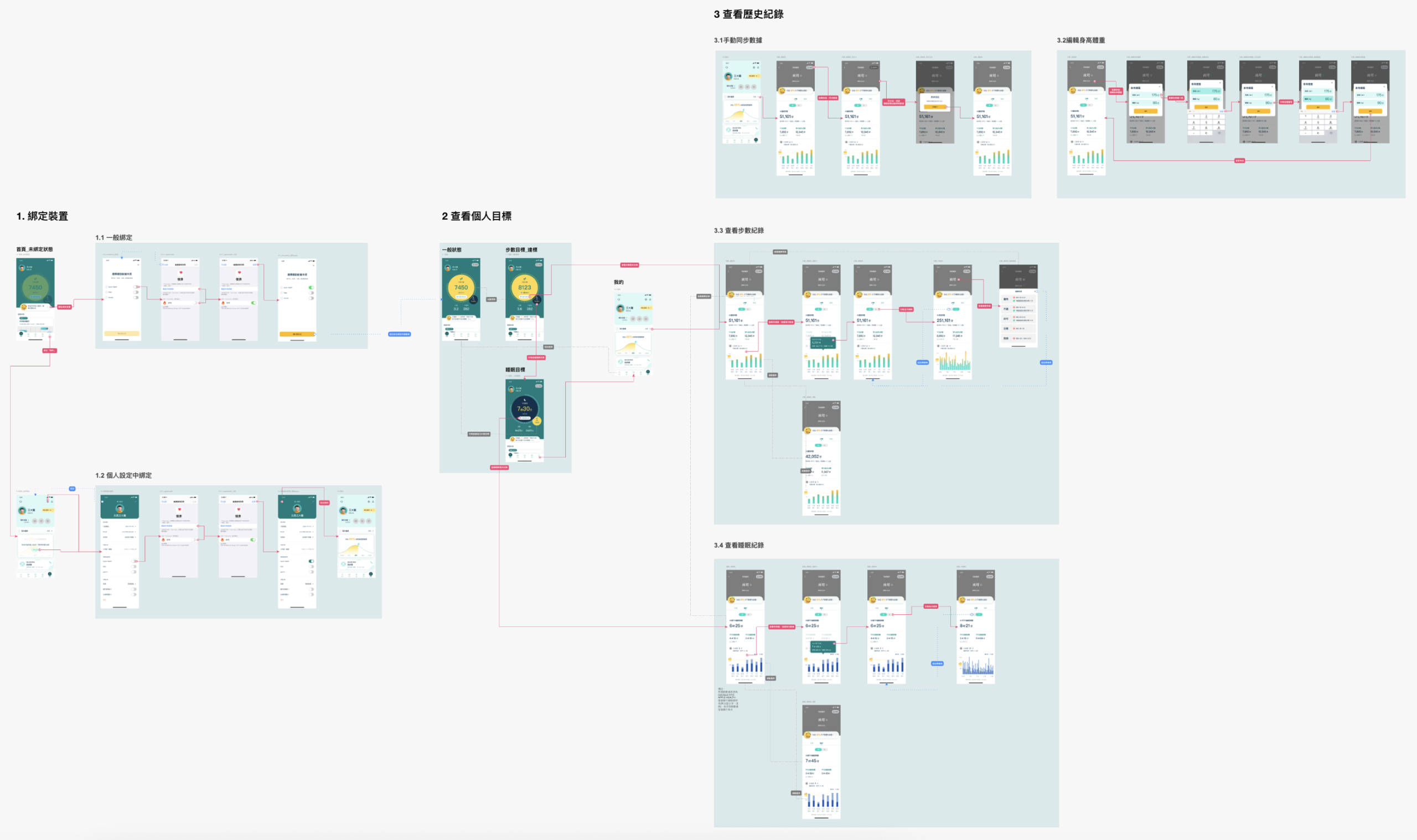
4. UX flows : Mapping key user journeys into clear flows
5. UI / GUI design : Turning UX flows into intuitive, functional interfaces.
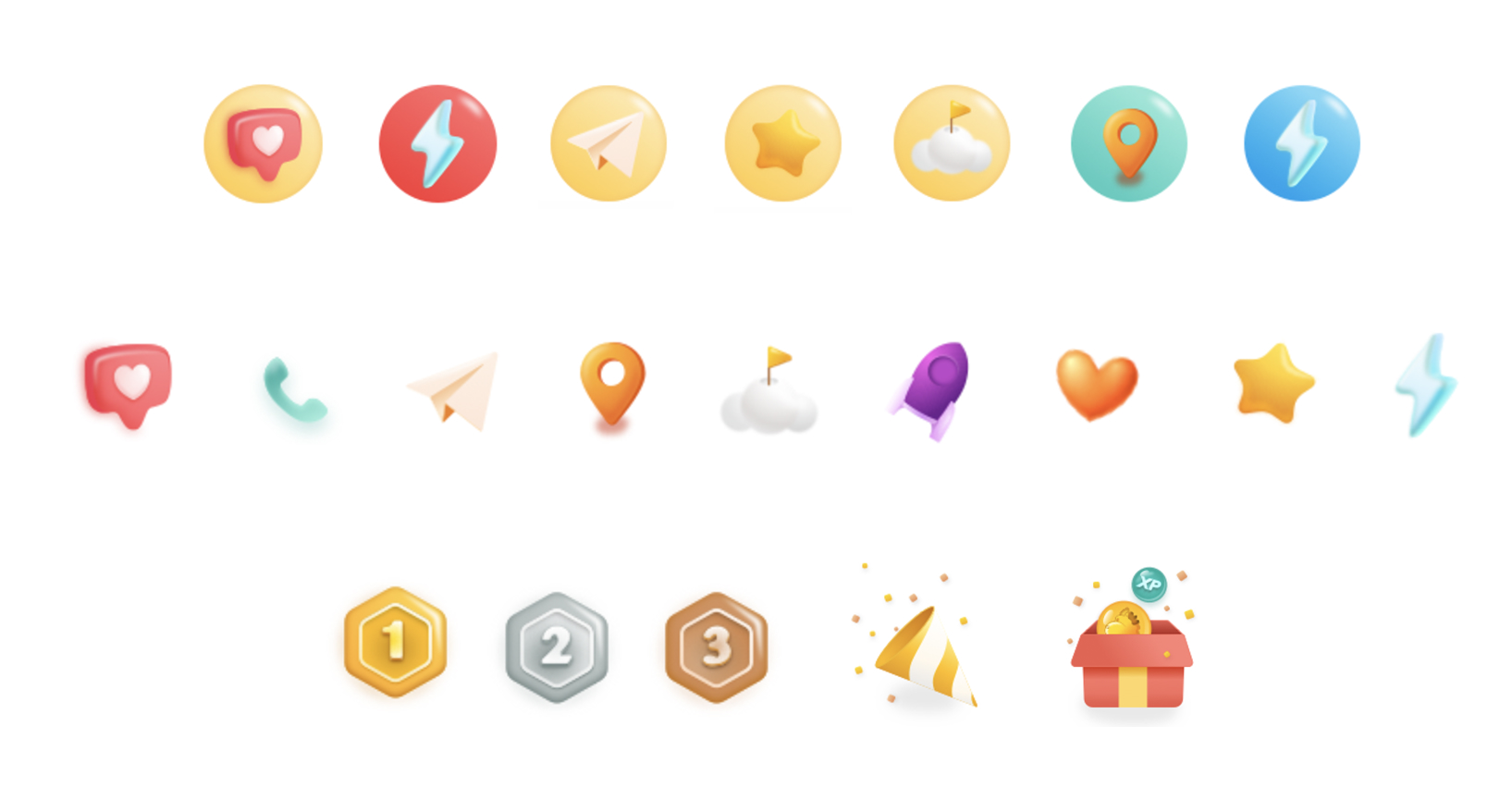
I designed key interactive interfaces and led most of the illustration and badge design.
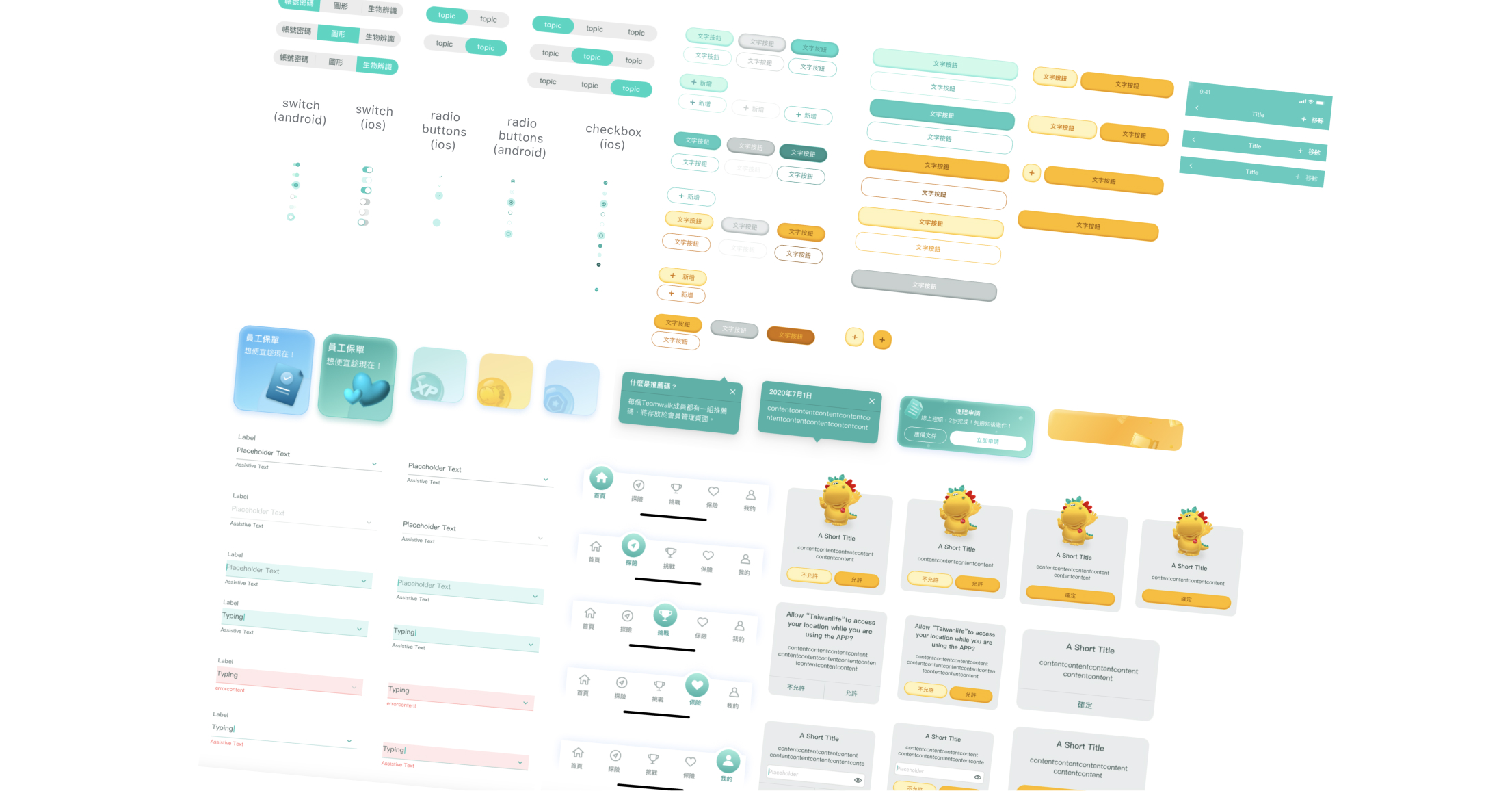
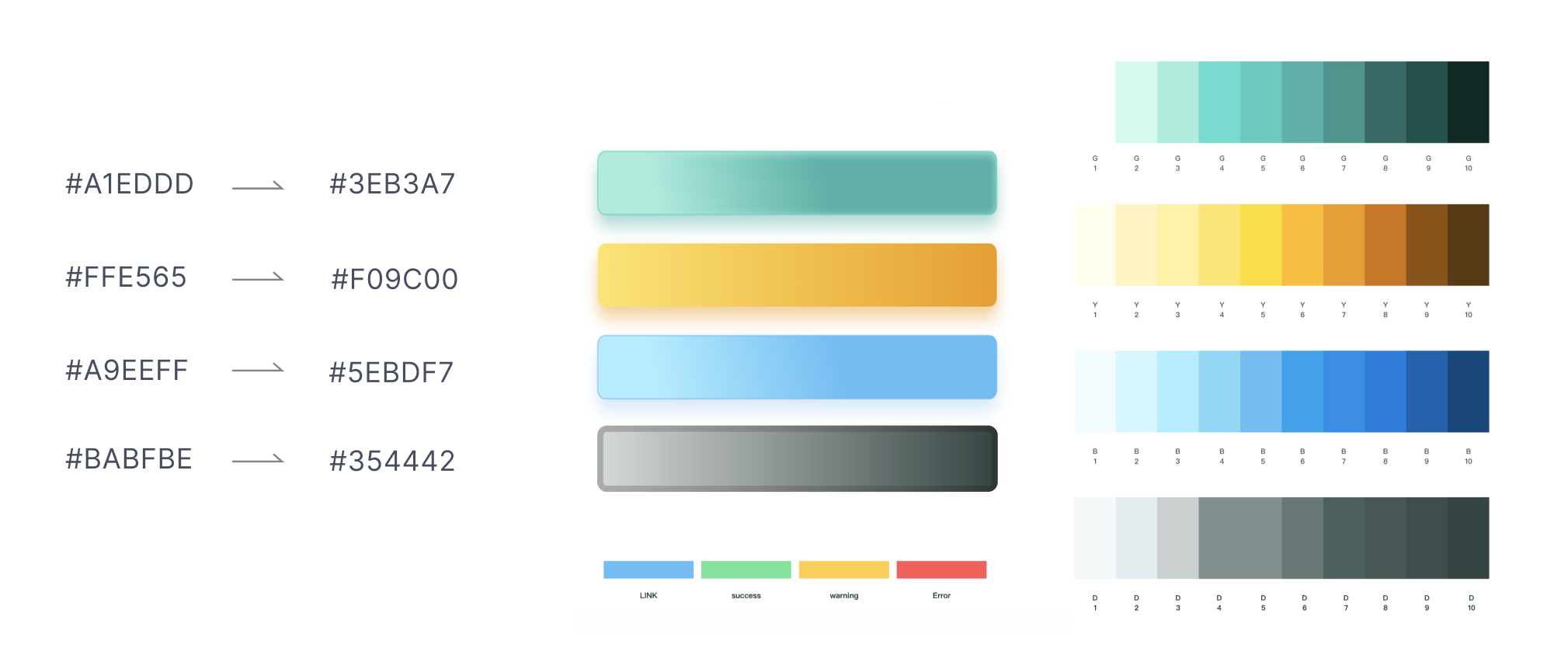
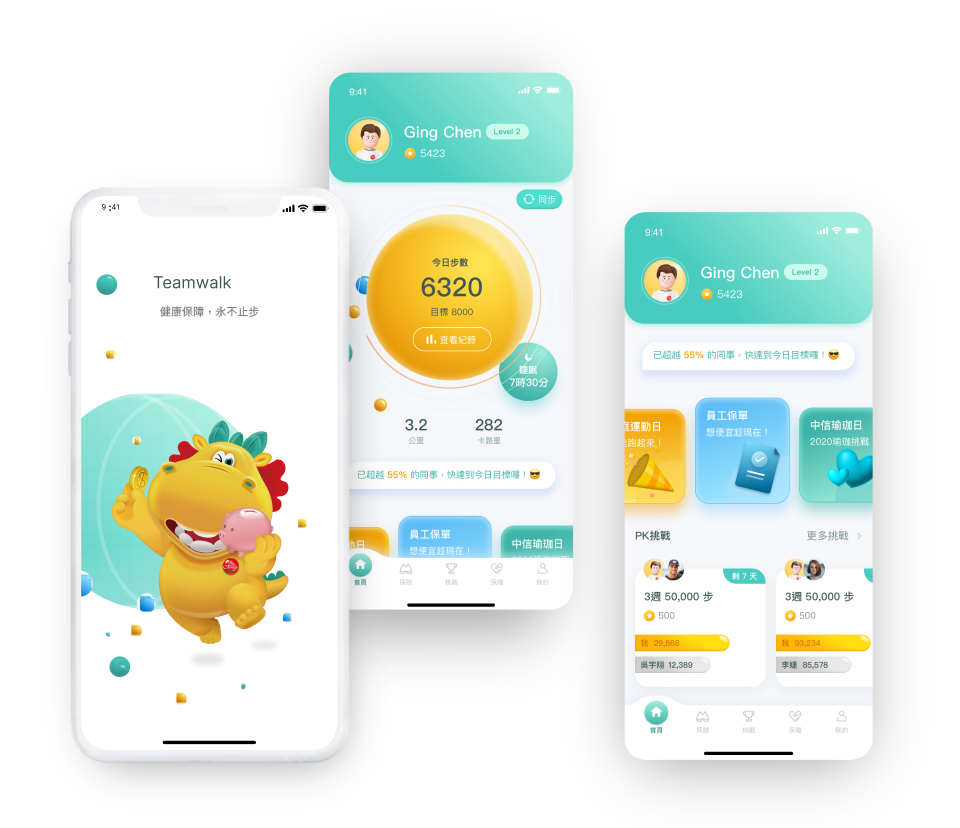
Through multiple rounds of visual exploration, we established a cohesive design system defined by subtle 3D elements, rounded forms, and vibrant colors.
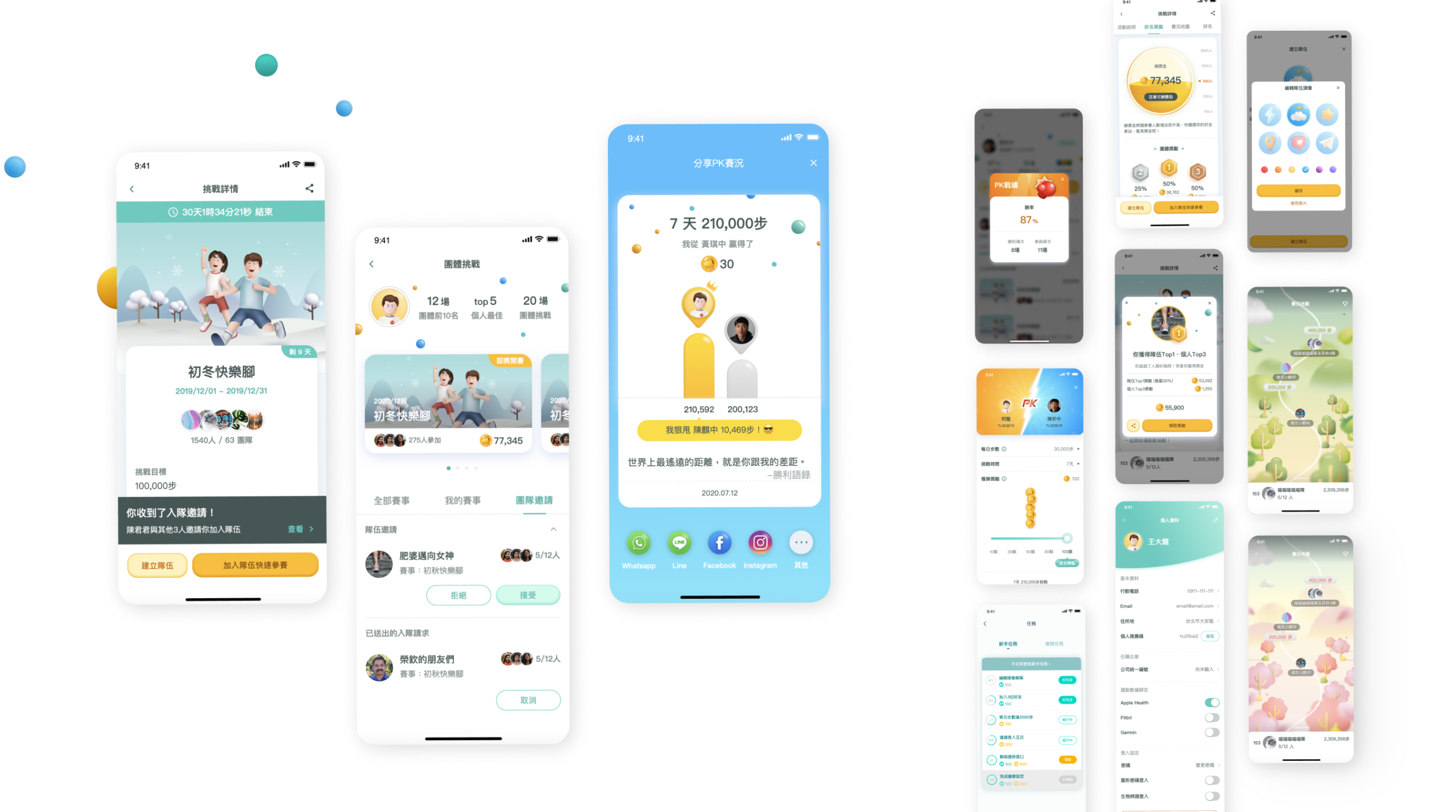
TeamWalk : A Group Insurance and Health Management App
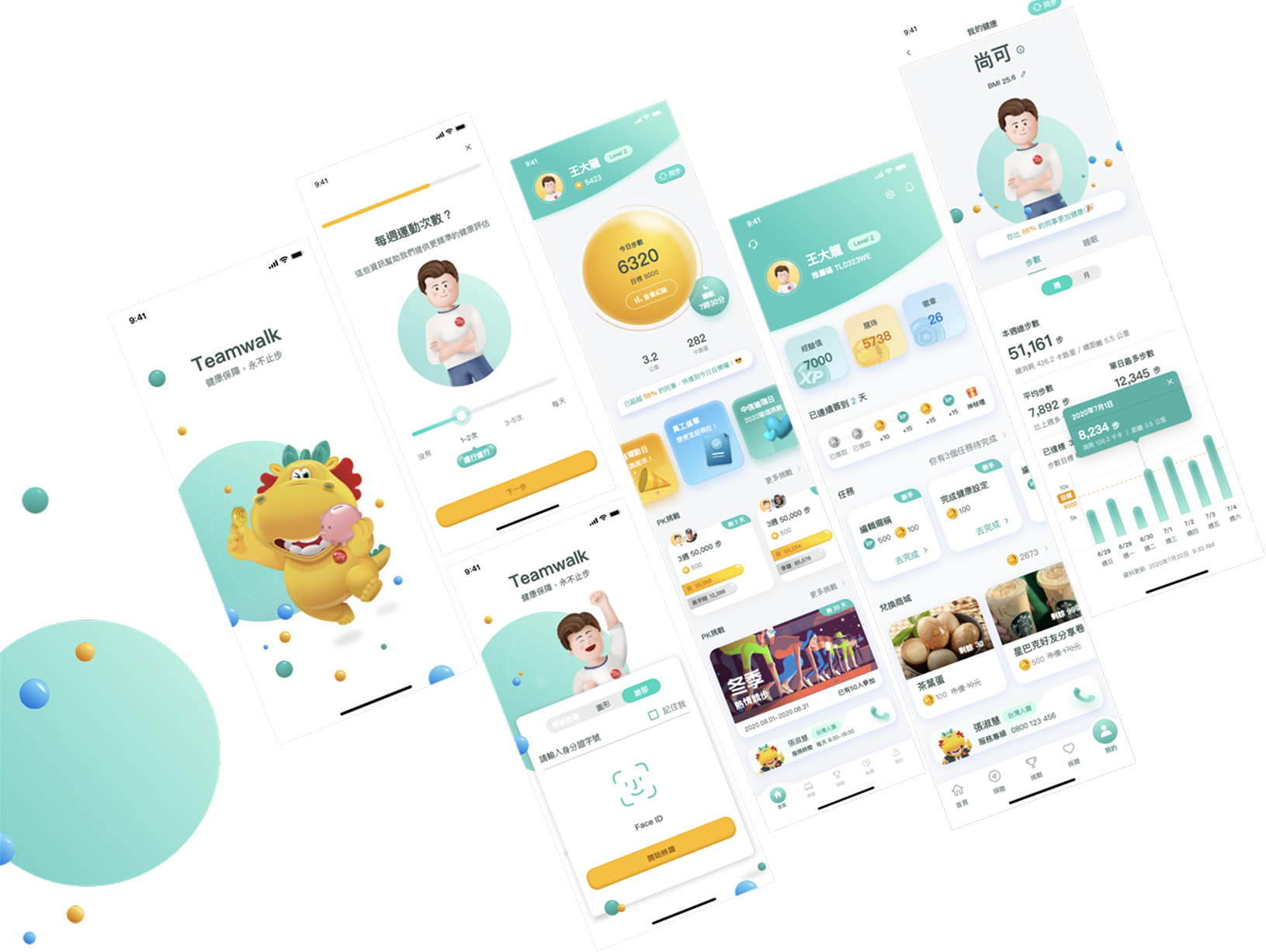
Designed for both parents and children, the app features TA-based interfaces tailored to different user needs, creating a new family-oriented financial experience.
✺ Health Promotion
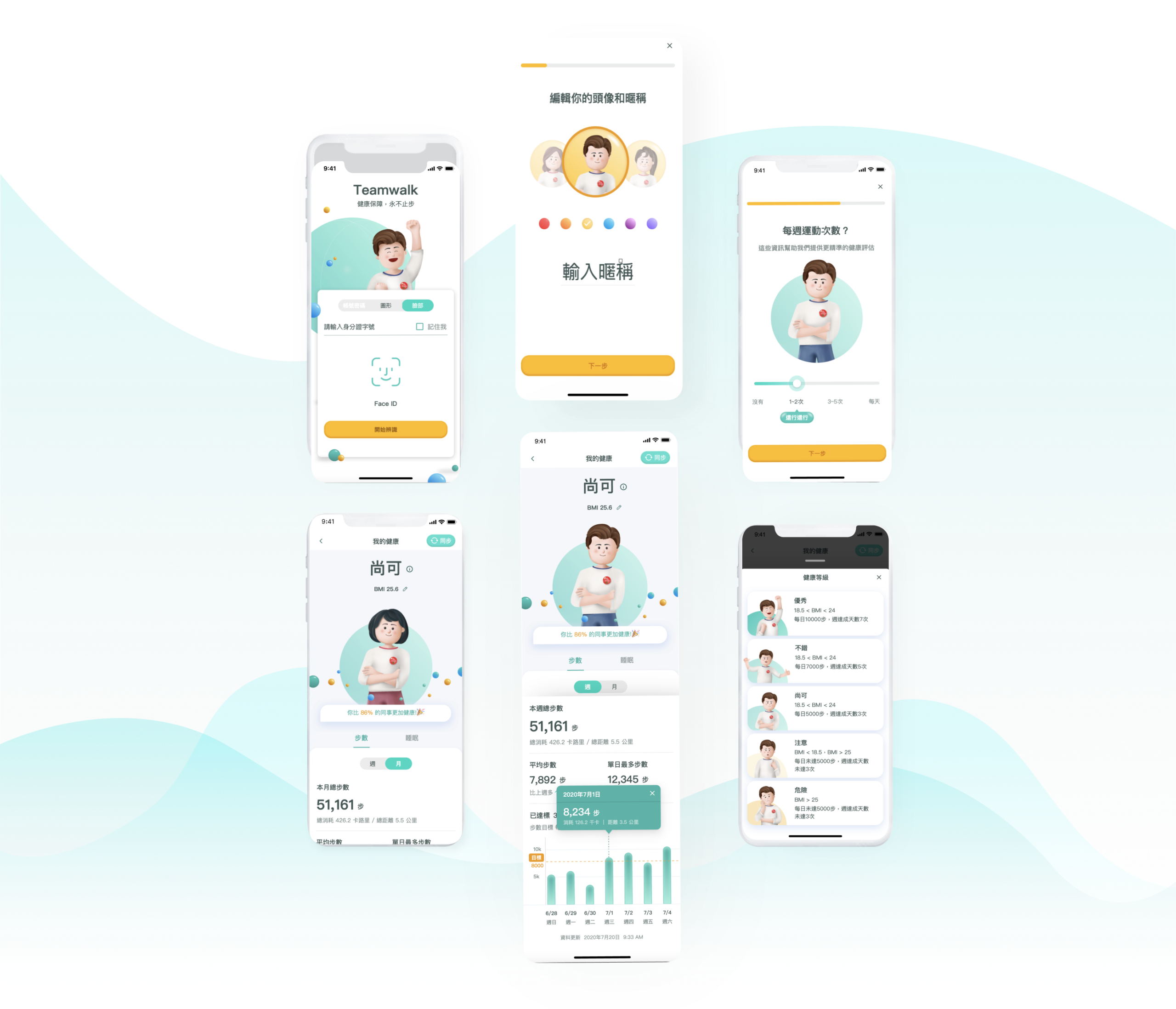
During onboarding, users can customize their avatar to create a more personalized experience. The avatar dynamically reflects their weekly activity level and BMI, visually communicating their health status through different expressions.
In the Health section, users can also set personal goals to build long-term healthy habits, supported by tasks and rewards that encourage continued engagement.
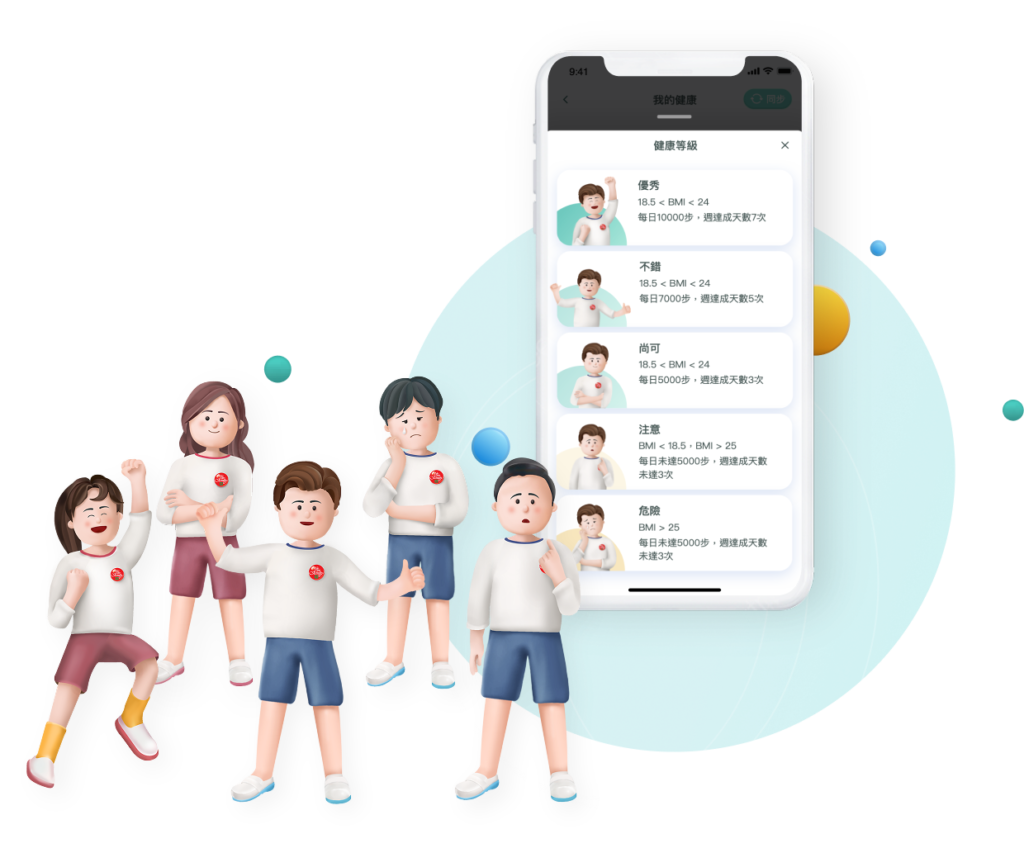
✺ Health Status
Health scores are categorized into five levels: Excellent, Good, Fair, Moderate, and Needs Attention.
✺ Adventure Map :UI Gamification & Illustration
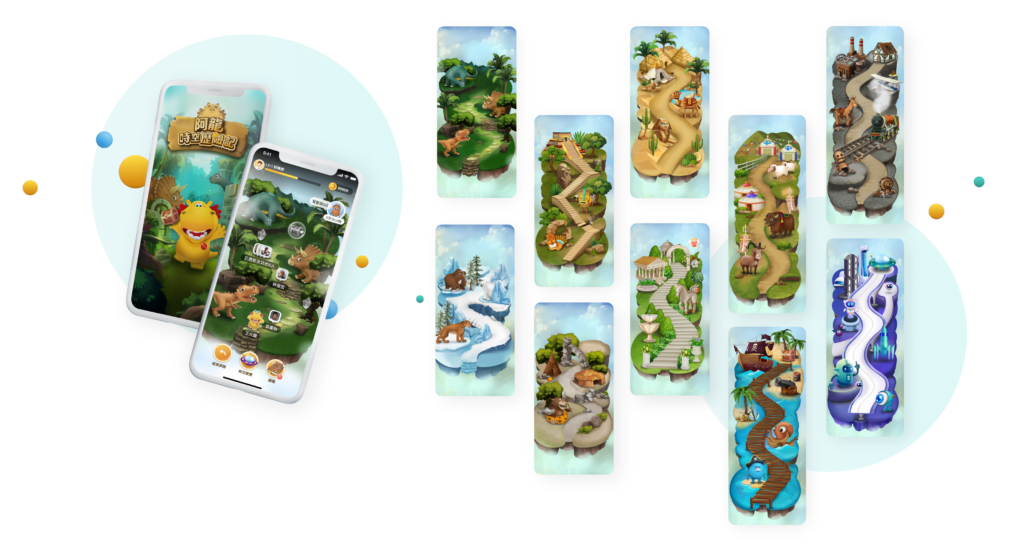
A gamified journey that combines social interaction with personal growth. Users convert their daily steps into walking experience points to unlock treasure chests and energy crystals along the way. By traveling through different eras, users gradually uncover the story and explore the evolving game world.
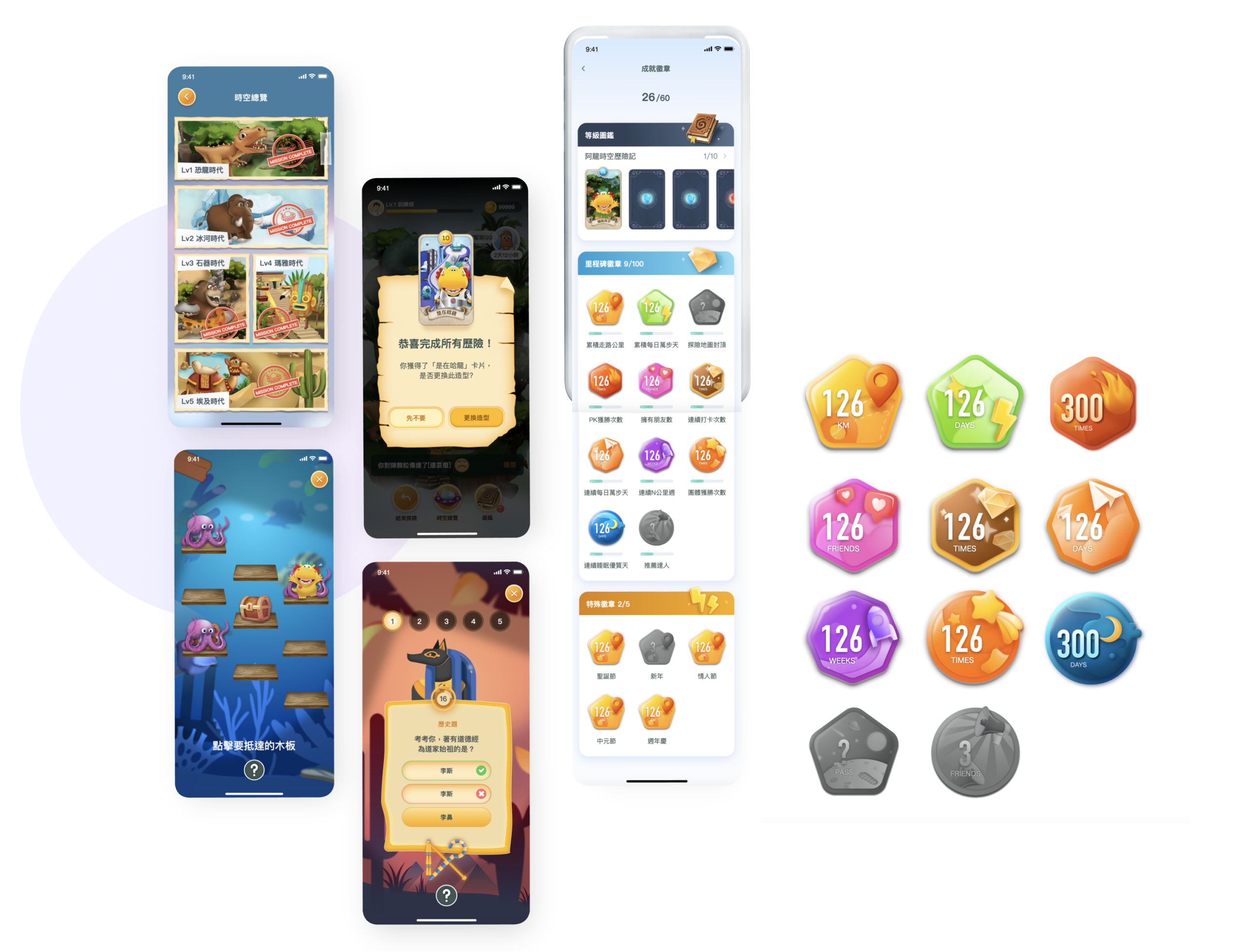
✺ character cards and achievement badges
Complete challenges and reach different milestones to unlock rewards, including limited-time mini-games. Users can collect character cards and achievement badges as they progress through each level.
✺ Designing Social Competition to Drive Engagement
We designed a diverse range of competition formats, including one-on-one challenges and team-based competitions, allowing users to participate in ways that match their preferences. By combining friendly competition, collaboration, and real-time interaction, the experience strengthens community engagement and motivates users to stay active over time.